
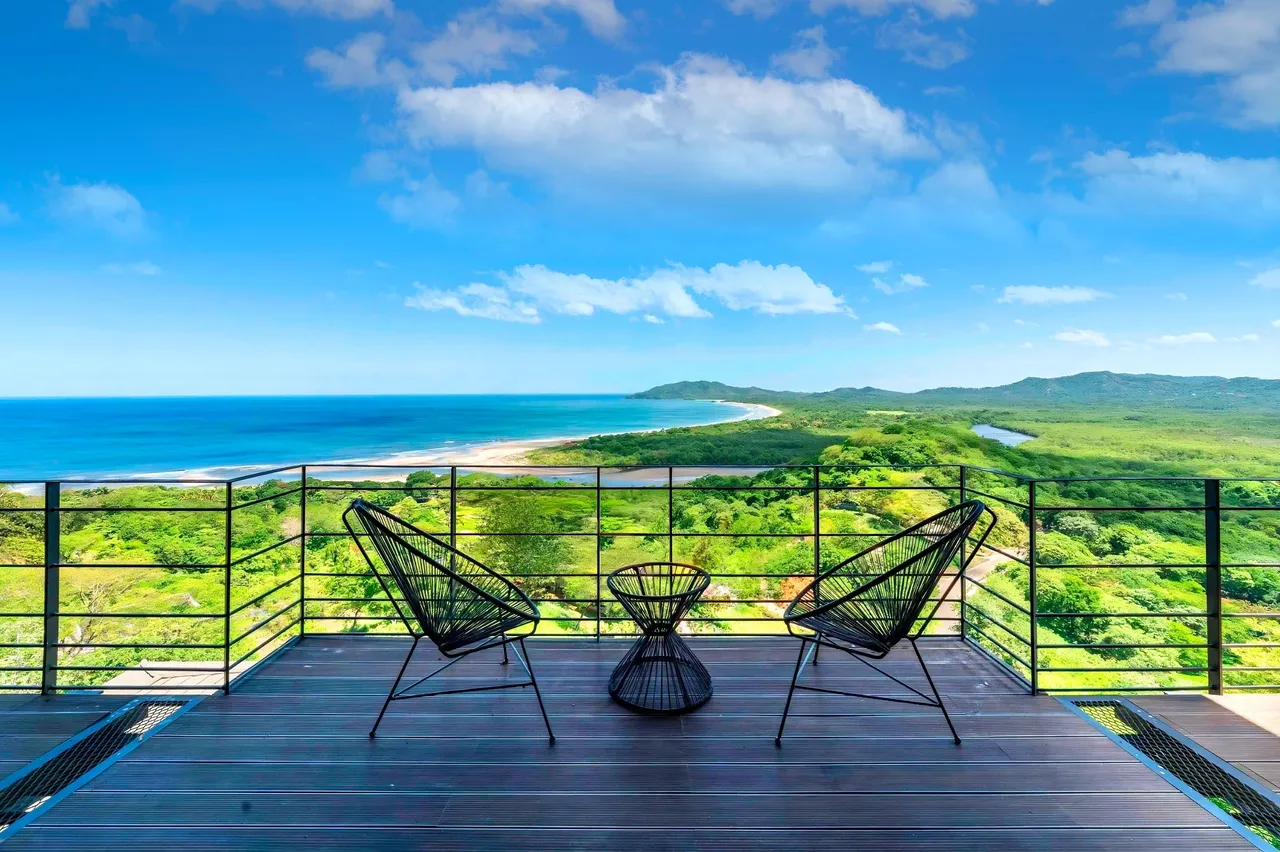
Working remotely from a Costa Rica villa sounds like the dream until you’re mid-call and the Wi-Fi drops during rainy season, or you realize your “morning meeting” is actually happening at 6 a.m. villa time because nobody checked the time zone math. It can genuinely work — Guanacaste’s time zone alignment with U.S. business hours is a real advantage most people underestimate — but it takes a bit of planning that goes beyond “does the villa have Wi-Fi.”
The Time Zone Advantage Nobody Markets Properly
Costa Rica runs on Central Standard Time (UTC-6) year-round — no daylight saving time changes. That means it’s aligned with U.S. Central Time all year, one hour behind Eastern, and one hour ahead of Mountain during daylight saving months. For a remote worker based on the U.S. East or West Coast, that’s a far smaller adjustment than working from Europe or Asia: a call scheduled for 2 p.m. Eastern is 1 p.m. villa time, full stop, no jet-lag-style overlap gymnastics. This is arguably the most underrated reason Guanacaste works better for remote work than farther-flung “digital nomad” destinations.
What Internet Speed You Actually Need vs. What’s Marketed
“High-speed Wi-Fi” on a villa listing can mean anything from a genuinely solid fiber connection to a satellite backup that struggles the moment two people are on video calls simultaneously. For real remote work — video calls, file uploads, screen sharing — you want a minimum of 25 Mbps download and 10 Mbps upload, tested, not advertised. Fiber internet has expanded significantly through Tamarindo and the surrounding Guanacaste corridor in recent years, and most established villas in the area now run on fiber rather than older DSL or satellite connections.
Ask two specific questions before booking if remote work is part of the trip: what’s the actual connection type (fiber vs. satellite vs. cable), and is there a backup — either a secondary provider or a mobile hotspot — for outages during storms, which do happen more frequently in rainy season (roughly May through November).
Setting Up a Real Workspace in a Vacation Villa
Open-air tropical architecture is beautiful and occasionally a problem for video calls — direct sun behind you, ambient outdoor noise, or a beautiful ocean view that becomes a screen-glare issue by mid-morning. A workable setup means a desk or table that faces away from direct backlight, ideally near (not directly under) a ceiling fan rather than open windows where wind noise carries into a mic, and enough distance from communal pool or kitchen areas that a 10 a.m. call isn’t competing with everyone else’s vacation.
Multi-villa estates have a practical edge here: a separate villa or a quiet upper-floor room can function as a dedicated workspace while the rest of the group uses the pool, without anyone needing to whisper through a house.
Comparing Work Setups Across Room Types
| Setup | Best For | Trade-off |
|---|---|---|
| Dedicated office/den space | Full workdays, back-to-back calls | Not every villa has one — confirm before booking if this matters |
| Bedroom desk | Light work, checking email, occasional calls | Less separation from rest of group’s daytime noise |
| Covered terrace with table | Async work, writing, non-video tasks | Outdoor sound and glare make video calls harder |
| Separate villa on a multi-villa estate | Full-time remote work alongside a vacationing group | Requires a multi-villa property, not a single house rental |
Balancing Work Blocks with Family or Group Time
The trips that work best set expectations before landing, not on day one. Block specific work hours — commonly early morning (6–10 a.m. villa time, still overlapping U.S. business hours) or late afternoon — and treat the rest as genuinely off. The time zone alignment actually makes an early-morning block practical in a way it wouldn’t be from, say, Bali, where a U.S. morning call happens at midnight local time.
Communicate the schedule to the rest of the group in advance, including any grandparents or kids along for the trip, so “I have calls until 10” doesn’t turn into a daily renegotiation.
Backup Plans When Power or Internet Drops
Power outages happen occasionally in Guanacaste, more often during rainy-season storms, and rarely last more than a couple of hours. Ask whether the villa has backup power (a generator or battery system) for anything that can’t tolerate a dropped call mid-sentence. For internet specifically, a local SIM card with a data plan as a mobile hotspot backup is inexpensive and worth setting up on arrival, not after the first outage.
Common Mistakes Remote Workers Make on These Trips
The most common one is booking the trip like a pure vacation and bolting work on as an afterthought — no confirmed workspace, no tested internet, no conversation with the rest of the group about when calls are happening. The second most common is overcorrecting the other way and scheduling too much work, which defeats the point of being somewhere worth visiting in the first place. The trips that actually work treat the work block as a fixed, respected part of the day — like a flight time everyone plans around — rather than something squeezed in whenever it’s convenient. The third mistake, smaller but real, is not testing the workspace’s video call setup (lighting, background noise, camera angle) before the first real meeting rather than during it.
Frequently Asked Questions
What time zone is Costa Rica in?
Central Standard Time (UTC-6) year-round — Costa Rica does not observe daylight saving time, so the offset from U.S. time zones shifts slightly depending on the season in the U.S.
Is Wi-Fi reliable enough for video calls in Tamarindo?
Most established villas now run on fiber internet, which handles video calls well. Confirm the connection type directly rather than relying on “high-speed Wi-Fi” as a listing description, and ask about backup options for storm-related outages.
Do I need a local SIM card?
It’s a smart backup even with villa Wi-Fi. Local prepaid SIM cards with data plans are inexpensive and widely available, and function as a hotspot if the main connection drops.
Can I get real work done on a family trip, or is that unrealistic?
It’s realistic with clear boundaries — a defined work block and, ideally, physical separation from the rest of the group’s daytime activity. It’s much harder without either.
How’s the power reliability?
Generally stable, with occasional short outages during rainy-season storms (May–November). Ask if the villa has generator or battery backup if uninterrupted power matters for your work.
What’s the best time of day to schedule U.S. calls?
Morning villa time overlaps well with U.S. Eastern and Central business hours given the UTC-6 alignment — a call at 9 a.m. villa time lands around 10 a.m. Central or 11 a.m. Eastern.
Is there a quiet space to work if I’m traveling with a group?
On a multi-villa estate, yes — a separate villa or upper-floor room can serve as a dedicated workspace. On a single-house rental, check whether a den or office space exists separate from communal areas.
Does rainy season affect internet or power more than dry season?
Yes, storms during rainy season (roughly May–November) are the most common cause of short outages. Dry season (December–April) is generally more stable for both.
Are coworking spaces available nearby if the villa setup doesn’t work out?
Tamarindo has a small but growing number of coworking spaces in town, useful as a backup for a specific busy day, though most remote workers find a well-chosen villa setup sufficient for the length of a typical trip.
How much should I budget for connectivity backups?
A local SIM with a data plan typically runs a modest daily or weekly cost — inexpensive enough to treat as a standard trip expense rather than something to skip.
Recent Articles
Related reading: Tamarindo Luxury Rentals: What “Luxury” Actually Buys You in Guanacaste and Playa del Coco Costa Rica: Things to Do From a Villa Base in Guanacaste.
Need a quiet space to work between group activities? See how Villagio Musca’s separate villas are laid out.