
There is no regulator for the word “luxury” in vacation rentals. Any owner can type it into a listing title. Which is why searching for Tamarindo luxury rentals turns up everything from a genuinely extraordinary hillside estate to a standard three-bedroom with a nice sofa and a good camera angle.
The gap between those two is not marble countertops. It is service, privacy, and setting — three things that are hard to photograph and easy to skip in a listing description. This guide breaks down what actually separates a luxury rental in Tamarindo from a merely nice one, and what to ask before you pay for the difference.
Tamarindo, Briefly
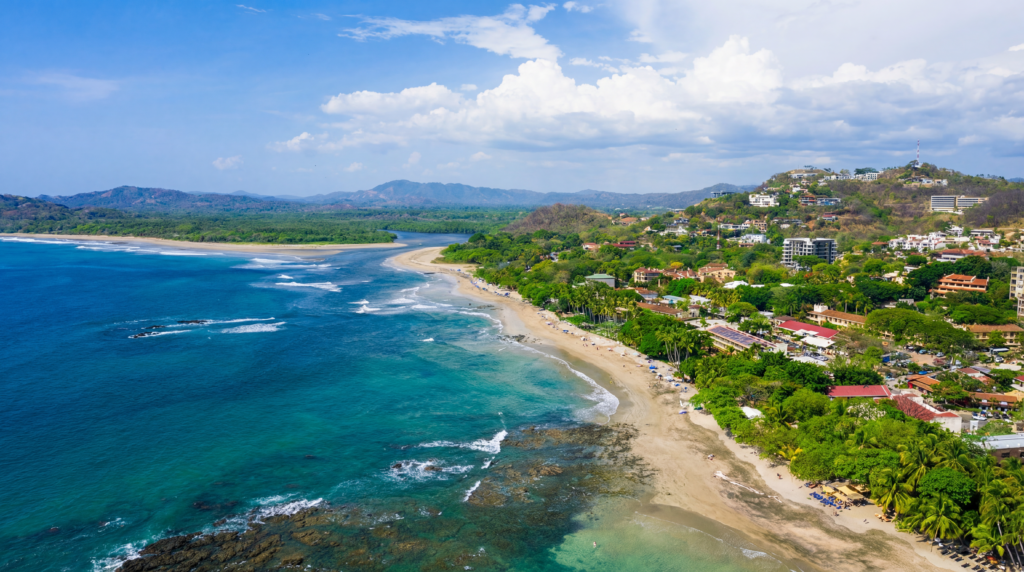
Tamarindo sits on Costa Rica’s Pacific coast in Guanacaste, the country’s driest and sunniest province. Liberia International Airport (LIR) is roughly an hour and fifteen minutes away by car, which makes it one of the most accessible beach destinations in Costa Rica — you can land in the morning and be in a pool by early afternoon.
The town itself is a working beach town rather than a resort strip: surf schools, good restaurants, grocery stores, dive shops, a real local community. That matters for a luxury rental, because it means you can genuinely live at your own pace — provision the kitchen, cook or have someone cook for you, and skip the fixed hotel dinner seating entirely.
Around Tamarindo are five distinct beaches within easy driving distance — Tamarindo, Langosta, Grande, Avellanas and Conchal — plus volcano hot springs, hanging bridges, and catamaran and sport-fishing charters. The area rewards a base you actually want to come home to.
The Five Things That Separate Real Luxury Rentals
1. Service, not just square footage
The clearest dividing line in Tamarindo luxury rentals is whether anyone is looking after you. A large house with keys handed over at the door is a house. A property with a private chef option, concierge support, excursion booking, and someone who answers the phone at 9pm is a different product entirely.
Private chef service in particular changes the shape of a trip. Breakfast on the terrace instead of a drive into town. A multi-course dinner with fresh, locally caught seafood while the sun drops into the Pacific, with no reservation, no dress code, and no one driving home afterward. For groups, it is usually the single upgrade with the biggest return.
2. Privacy architecture
The second dividing line is how the property handles a group. Most large rentals are one building with bedrooms off a hallway — technically enough space, practically a shared house where someone is always awake in the room next door.
Properties designed with separated structures solve this. Everyone gets a real retreat to disappear into, and the shared spaces feel chosen rather than forced. If you’re traveling as two or three couples, or as a multigenerational family, this single design decision affects the trip more than any finish or amenity.
3. Setting and elevation
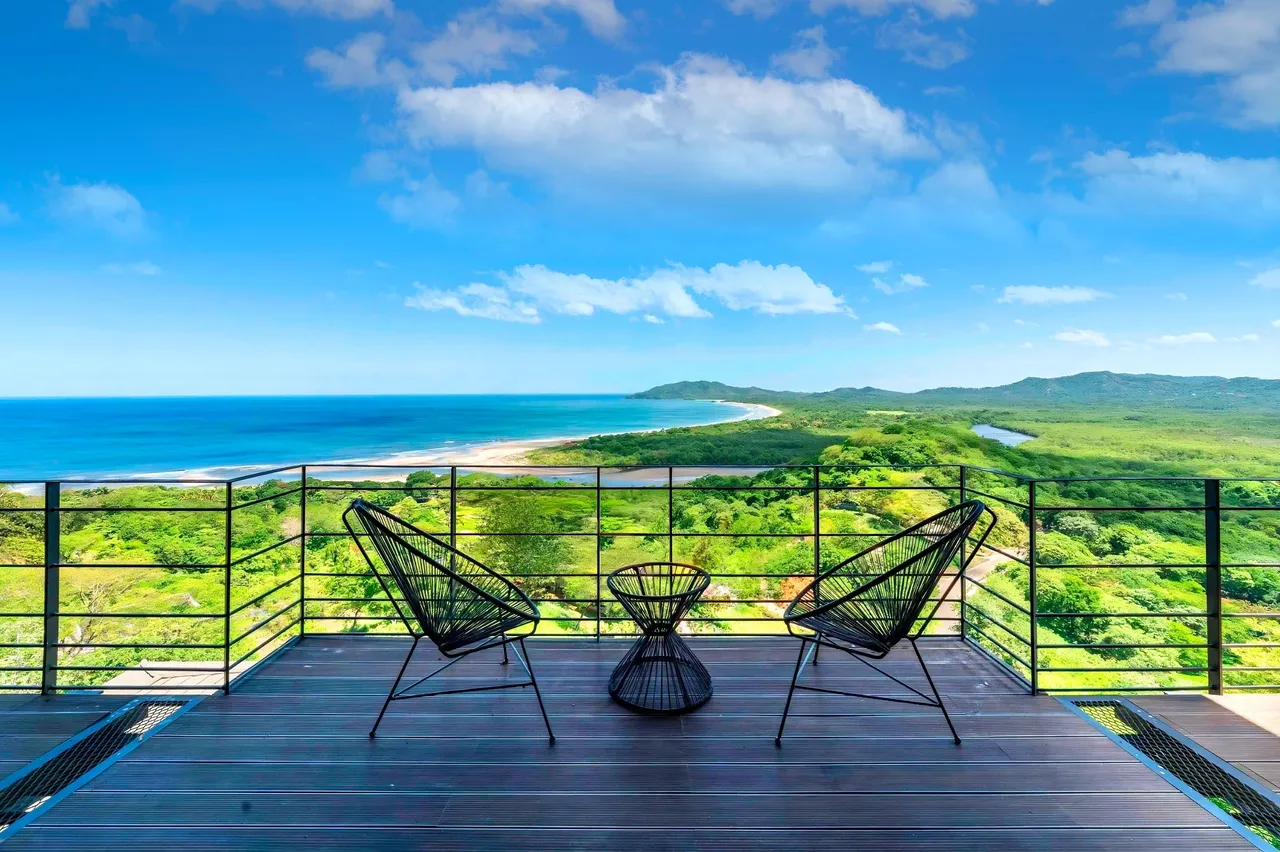
Flat beachfront lots have short views — they end at the first tree line or neighboring roof — and they get public beach traffic past the terrace. Hillside properties above the coast see the whole arc of the coastline and the open Pacific horizon, and they catch the trade winds that beachfront lots miss, which matters a great deal in February and March.
The trade-off is a short drive to the sand rather than a walk. Most travelers who have done both end up choosing elevation the second time.
4. Build quality you can feel
Genuine luxury properties in Guanacaste are usually years in the making, because the climate is unforgiving — salt air, intense sun, heavy green-season rain. What that buys is the difference between a house that photographs well and one that still feels considered on day seven: floor-to-ceiling glass that actually seals, imported fabrics and furniture, hand-selected local stone, and views that were designed into the floor plan rather than discovered afterward.
5. Pools per group, not pools per property
“Private pool” in a listing usually means one pool the whole group shares. On the best multi-structure properties it can mean a pool per villa. If your group has early risers and late sleepers, or people with genuinely different ideas of a good day, this is not a small detail.
Villagio Musca: A Case Study in All Five
Villagio Musca, Tamarindo is a useful example because it happens to hit every one of the criteria above.
It sits high on a rocky hillside above the Pacific, inside a private gated community minutes from downtown Tamarindo — secluded enough to hear birdsong and ocean breeze rather than traffic, close enough that town, the beaches and the estuary are all a short drive.
Critically, it is not a single villa. It is a private collection of three independent ocean-view villas on one estate, each with its own infinity pool and private terrace. Five bedrooms, five and a half bathrooms, three pools, ten guests. Every bedroom, lounge and main gathering space faces the ocean, with views running from the Tamarindo coastline out to the open Pacific.
| Bedrooms | Bathrooms | Private pool | |
|---|---|---|---|
| Villa Pacifica (main) | 3 | 3.5 | Yes |
| Villa Celeste | 1 | 1 | Yes |
| Villa Brisa | 1 | 1 | Yes |
| Estate total | 5 | 5.5 | 3 pools · 10 guests |

Villa Pacifica is the heart of the estate: three bedrooms each with private bathroom and dressing room, an open-concept living and dining area, a gourmet kitchen, and an infinity pool at the terrace edge. Floor-to-ceiling glass opens the interior straight onto the terrace.
Villa Celeste is a completely independent one-bedroom villa — its own entrance, full bathroom, private terrace and infinity pool, nestled in tropical landscaping. Built for couples who want autonomy without leaving the group.
Villa Brisa mirrors Celeste: standalone bedroom, full bathroom, private terrace, private infinity pool, sweeping ocean views.
On service: Villa Pacifica’s kitchen was purpose-designed for private chef experiences, from a traditional Costa Rican breakfast of gallo pinto and fresh tropical fruit to a multi-course dinner built around locally caught seafood and seasonal ingredients.
On build: the estate was more than three years in the making, with French fabrics, Italian furniture and hand-selected local stone, surrounded by a lush tropical garden.
One honest caveat. The hillside setting is what makes the property spectacular, and it also means stairs and elevation changes throughout. Guests who need minimal stairs or easier level access should look at Villagio Musca Playa Del Coco instead.

Who a Luxury Rental Is Actually Worth It For
Two or three couples traveling together. This is where separated villas pay for themselves. Everyone gets their own front door; nobody negotiates over the good bedroom.
Multigenerational families. Grandparents in the main villa, adult kids in the standalone villas, everyone together at the pool and the dinner table.
Milestone trips. Anniversaries, birthdays, honeymoons, small weddings. The private chef and the sunset terrace do the heavy lifting.
Small corporate retreats and offsites. Ten guests, three pools, a gourmet kitchen and a setting that makes people actually talk to each other.
When it’s probably not worth it: a short two- or three-night stop, a trip where you’ll be out on excursions from dawn to dark, or a group needing step-free access.
Season and Rates
Rates in Tamarindo move with the season, and the season is unusually predictable here.
Dry season, December through April, is peak. Near-guaranteed sunshine, strong breezes, highest demand — December and January book earliest and go fastest.
Green season, May through November, is the value window. Mornings are typically sunny with rain arriving late afternoon, often clearing by evening. The landscape turns brilliantly green, wildlife is more active, and both crowds and rates drop meaningfully. September and October are the wettest months.
May and November are the sweet spot: green landscape, quiet beaches, mostly good weather, shoulder-season pricing.
If you’re booking a specific property for a specific occasion, peak-season dates need to be locked in months ahead. Luxury inventory in Tamarindo is small — there simply aren’t many estates of this kind — and the good weeks go early.
Getting There and Getting Around
Fly into Liberia (LIR) rather than San José if you can. It’s roughly seventy-five minutes from Tamarindo by road versus a four-to-five-hour drive or a connecting flight from the capital, and on a one-week trip that difference is most of a day at each end. Many luxury properties will arrange a private transfer, which is worth it on arrival day when you’re tired and the last thing you want is a rental counter.
Once you’re settled, you’ll still want a car. Tamarindo town is walkable, but the beaches and excursions that make the area worth visiting — Playa Grande across the estuary, Avellanas to the south, Conchal to the north, the Rincón de la Vieja volcano area inland — all need wheels. In green season, take the 4×4. Some of the most rewarding roads here are unpaved, and after an afternoon downpour that stops being optional.
Questions Worth Asking Before You Book
- What service is actually included, and what’s an add-on? Chef, concierge, excursion booking, airport transfers, daily housekeeping — get the list.
- Is the pool private to my unit or shared across the property?
- Air conditioning in every bedroom? Guanacaste is genuinely hot February through April.
- How many minutes to the beach and to town? Ask for minutes, not adjectives.
- Stairs and elevation changes? Ask directly if anyone in your group has mobility limits.
- Is a rental car needed? In Tamarindo, for anything beyond the town beach, yes — and take a 4×4 in green season.
- Who do I call at 9pm? The answer tells you most of what you need to know.
Book Direct Where You Can
Booking directly with the property rather than through a listing platform generally gets you faster and more detailed answers, more flexibility on arrival and departure, and direct contact with the people who actually run the estate — which matters most when you’re arranging chef service, transfers or excursions around a specific occasion.
Frequently Asked Questions
What counts as a luxury rental in Tamarindo? Beyond size and finishes: available service (private chef, concierge, excursion support), genuine privacy for each part of the group, an elevated or secluded setting, and build quality that holds up to the coastal climate.
How far is Tamarindo from Liberia airport? Roughly an hour and fifteen minutes by car. Liberia (LIR) is the closest international airport and the easiest route in.
How many guests does Villagio Musca sleep? Up to ten, across five bedrooms and five and a half bathrooms in three separate villas.
Do all three villas have their own pool? Yes — three private infinity pools, one per villa.
Can I book just one villa rather than the whole estate? Contact the property directly; availability and configuration are handled case by case.
Is a private chef available? Yes. Villa Pacifica’s gourmet kitchen was designed for private chef service, which can be arranged for your stay.
When is the cheapest time to rent a luxury villa in Tamarindo? Green season, May through November, with September and October the lowest-demand months. May and November offer the best balance of price and weather.
Is a rental car necessary? For anything beyond downtown Tamarindo, yes. A 4×4 is recommended in green season.
Is Villagio Musca suitable for guests with mobility limitations? The Tamarindo estate is hillside, with stairs and elevation changes throughout. Guests needing easier access should consider the Playa Del Coco property.
How far in advance should I book? For dry-season dates, several months. Luxury inventory in Tamarindo is limited and peak weeks book early.
Ready to see it? Explore Villagio Musca, Tamarindo — three ocean-view villas, three private infinity pools, one hillside above the Pacific.