Most guides to Playa del Coco hand you a list of twelve attractions and leave you to figure out the logistics. This one is organized the way you’ll actually experience the town: by how far you have to travel, how much of a day each thing costs you, and what season it works in. Playa del Coco is a 25-to-35-minute drive from Liberia International Airport (LIR) — closer than almost any other beach town in Costa Rica — which changes the math on everything below. You are not spending your first and last days in transit. You are spending them on the water.
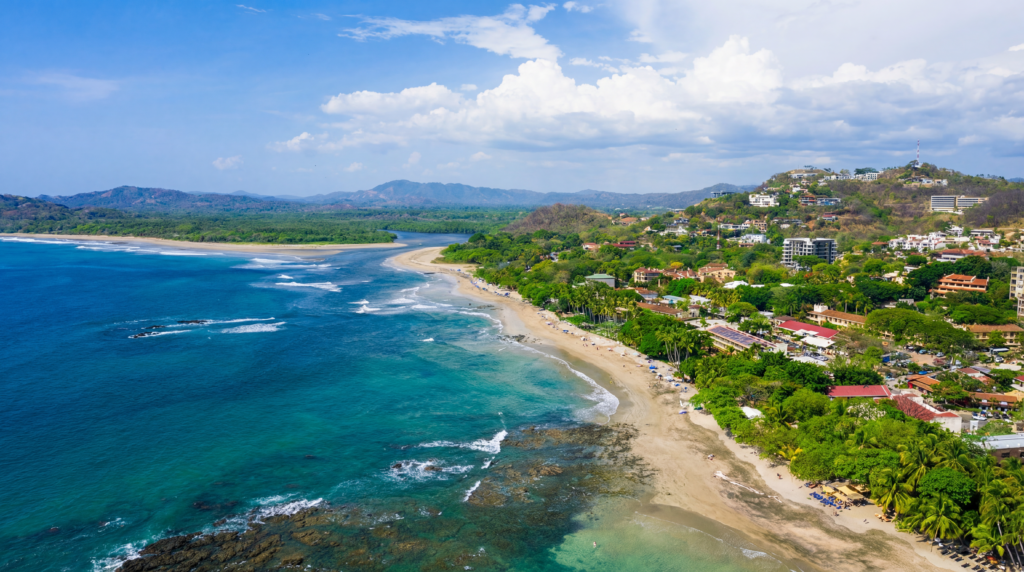
Here’s the honest framing: Coco itself is a working beach town, not a resort strip. Gray-sand crescent bay, fishing pangas moored offshore, a walkable main street with sodas and bars, and a marina culture built around diving and sportfishing. The beach is for sunsets and swimming, not surfing. The real value of Coco is that it’s the best-positioned launch point in northern Guanacaste — nearly everything worth doing in the province is inside a two-hour radius.
Quick reference: what to do and what it costs you in time
| Activity | Travel time from Coco | Time commitment | Best season |
|---|---|---|---|
| Coco beach + town walk | 0 min | 2–3 hrs | Year-round |
| Snorkel / two-tank local dive | 15–25 min by boat | Half day | Year-round |
| Catalina Islands diving | 30–45 min by boat | Half day | Dec–Apr (best visibility) |
| Bat Islands bull shark dive | 1.5–2 hrs by boat | Full day (advanced) | Jun–Oct |
| Sunset catamaran cruise | 0 min (departs Coco) | 3–4 hrs | Year-round |
| Sportfishing charter | 0 min | Half or full day | Dec–Apr peak billfish |
| Playa Ocotal | ~10 min drive | 2–4 hrs | Year-round |
| Playa Hermosa / Playa Panamá | 10–20 min drive | Half day | Year-round |
| Llanos de Cortés waterfall | ~1 hr drive | Half day | Best in green season |
| Rincón de la Vieja National Park | 1.5–2 hrs drive | Full day | Dec–Apr (trails drier) |
| Las Catalinas / Playa Danta | ~30–40 min drive | Half day | Year-round |
| Tamarindo | ~1 hr drive | Full day | Year-round |
Print that, or screenshot it. It’s the single most useful thing in this post.
In town: what Playa del Coco itself is good for
The beach and the sunset walk
Coco’s bay faces west-northwest, which is why the sunsets here are the town’s most reliable attraction. The sand is dark gray volcanic — it holds heat, so bring sandals in the afternoon — and the water is calm and shallow well out from shore. That combination makes it genuinely good for families with young kids and genuinely bad for surfers. If someone in your group wants waves, that’s a day trip to Tamarindo or Playa Grande, not a walk down the beach. Browse more things to do in Tamarindo on our guide.
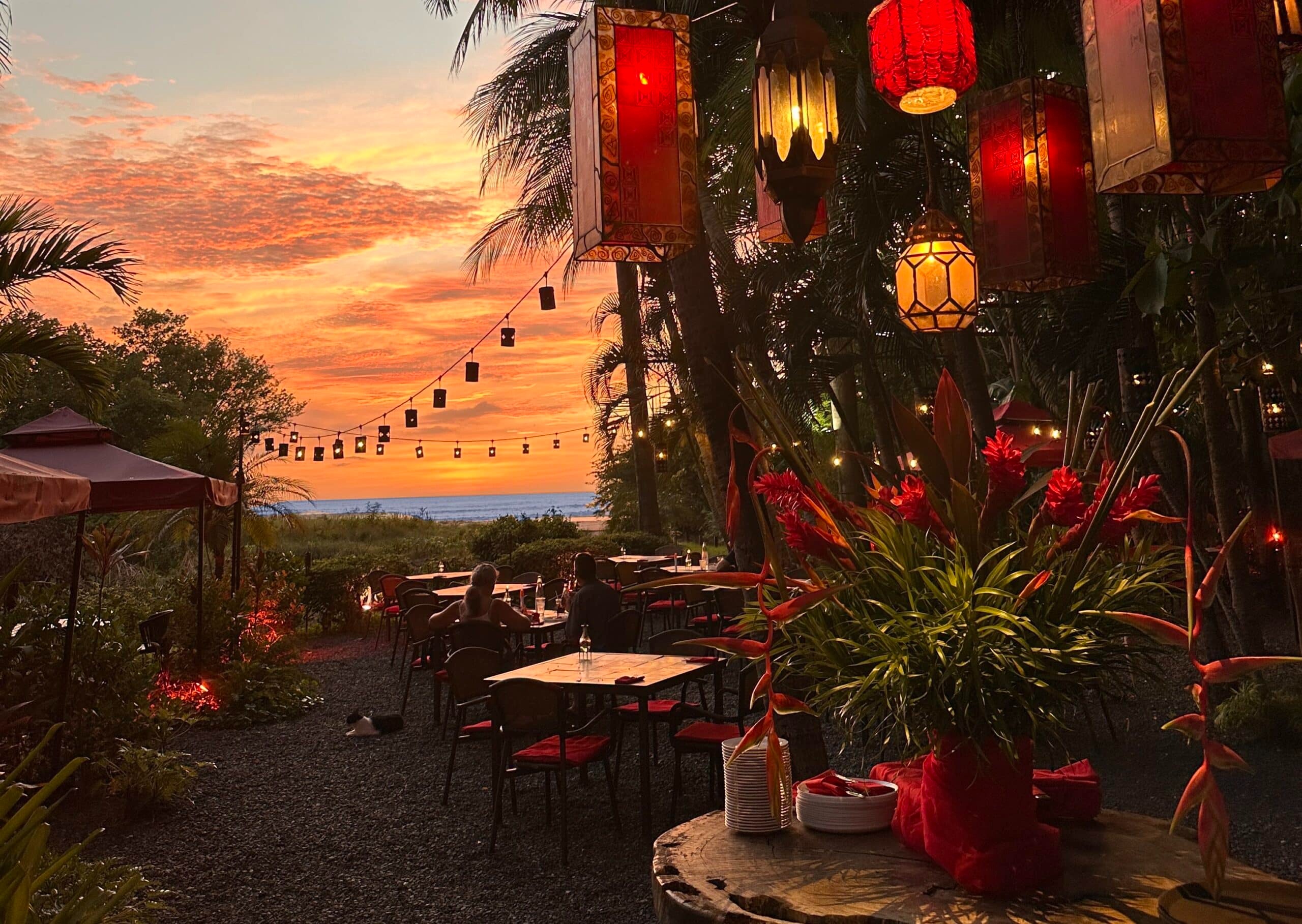
The best hour is roughly 5:00 to 6:30 p.m. Walk from the town plaza south along the water, watch the fishing boats swing on their moorings, and end up at one of the beachfront restaurants. Sunset in Costa Rica is fast — this close to the equator, you get about twenty minutes of good color, not an hour.
Eating and drinking
Coco punches above its weight for a town this size, largely because of the expat and dive-crew population. You’ll find beachfront seafood, a genuine craft brewing scene, casual sodas serving casado plates for a fraction of tourist-menu prices, and a handful of upscale rooms around the Pacífico development. The Coco Walk and Pacífico areas concentrate most of the shopping and dining; the main road into town has the local sodas.
Two practical notes. First, the sodas are where you eat well and cheaply — a casado with grilled fish, rice, beans, plantain and salad is the standard, and it’s excellent. Second, most kitchens in Guanacaste stop serving earlier than you’d expect. Plan dinner before 9 p.m. unless you’ve confirmed otherwise.
Nightlife, calibrated honestly
Coco has the most active nightlife in the immediate Papagayo area — bars with live music, a casino, sports bars, and a couple of late venues. It is not Tamarindo, and it is definitively not a party-destination town. If nightlife is the point of your trip, you’re in the wrong place by about an hour of driving. If you want two or three good evenings out during a week of beach and adventure days, Coco delivers exactly that.
On the water: why divers choose Coco
This is Coco’s real claim. The town is the primary mainland departure point for northern Guanacaste’s best dive sites, and dive shops here run daily boats.
Local sites (15–25 minutes out) are the reliable everyday option: rocky pinnacles and reefs holding white-tip reef sharks, rays, eels, huge schools of grunts, and frequent turtle encounters. Visibility in Guanacaste is variable — this is a nutrient-rich, plankton-heavy coast, so you trade crystal water for big animal life. Divers coming from Caribbean destinations should recalibrate expectations before they get on the boat.
The Catalina Islands sit off the coast toward Playa Flamingo, a 30-to-45-minute boat ride. From roughly December through April, upwelling brings colder water and giant Pacific manta rays and mobula rays through the site. This is the signature Guanacaste dive and it’s worth planning your trip dates around if rays are on your list.
The Bat Islands (Islas Murciélago), inside the Santa Rosa marine sector, are the bull shark dive. It’s a 1.5-to-2-hour boat ride each way, a full-day commitment with early departure, and it’s for advanced certified divers only — deep, current-swept, and not a place to log your fifth dive. Bull sharks are present roughly June through October, peaking in the mid-summer months, which means the “worst” weather season is actually the right season for this trip. Book it well in advance; operators run limited boats.
Snorkeling works best on the boat tours rather than from the beach — Coco’s bay itself is silty. Half-day snorkel trips visit nearby coves and typically include gear, fruit, and a beach stop.
Sportfishing and catamarans
Coco’s fishing fleet targets sailfish and marlin offshore, with dorado, tuna, roosterfish and snapper closer in. Peak billfish season runs the dry months, December through April, but something is biting year-round. Charters run half days (inshore, family-friendly) or full days (offshore, serious).
Sunset catamaran cruises are the crowd-pleaser and the single best “everyone in the group is happy” activity in Coco: three to four hours, open bar and food, a snorkel stop, and a return under a sunset over open water. If you book one thing on the water, book this.
Beach hopping: the day trips that take under an hour
Playa Ocotal — about ten minutes south, and the quietest of the near beaches. Darker sand, a small protected cove, good shore entry, and a residential feel with a couple of beachfront restaurants. Go here when Coco feels busy.
Playa Hermosa — ten to fifteen minutes north, a long gentle crescent with calm water and a more upscale, quieter atmosphere. Excellent for kayaking, paddleboarding, and swimming with kids.
Playa Panamá — just past Hermosa on the Papagayo Gulf, exceptionally calm and shallow. The most protected water in the area.
Playa Danta and Las Catalinas — about 30 to 40 minutes south, a pedestrian-only planned village built into the hillside with a beautiful crescent beach, a network of mountain-bike trails, and a handful of very good restaurants. It’s the most photogenic half-day trip on this list.
Tamarindo — roughly an hour by road. This is the surf town: surf schools, board rentals, the biggest restaurant and nightlife scene in Guanacaste, and easy access to Playa Grande and Playa Langosta. Make it a full day rather than a dinner run.
Inland: waterfalls, volcanoes, and wildlife
Llanos de Cortés waterfall is the easy win — about an hour from Coco, just off the highway south of Liberia. A wide curtain of water dropping into a swimmable pool with a sandy beach at its base. Small entrance donation, open daytime hours, best flow during and just after green season. Go early; it fills up by mid-morning.
Rincón de la Vieja National Park is the marquee full-day trip, roughly 1.5 to 2 hours away depending on which sector you’re heading to. The Las Pailas loop takes you past bubbling mud pots, steam vents and fumaroles on an active volcano — a genuinely otherworldly hike of about two to three hours. The park is closed Mondays; check current hours and entry fees before you drive, and consider booking timed entry. Around the park’s access road you’ll find hot springs, canyon zip lines, horseback riding and river tubing operators, most of which bundle several activities into one adventure-park day. Do the national park and the adventure park on separate days — trying to combine them makes both rushed.
Palo Verde National Park, about two hours away, is the wetland birding destination: river boat tours through mangroves and marsh with crocodiles, howler monkeys, and enormous concentrations of waterbirds during dry season when the wildlife concentrates around remaining water.
Wildlife closer to home — several rescue and sanctuary operations sit between Coco and Liberia, and howler monkeys, iguanas, coatis and dozens of bird species are routine sightings in the hills right above town. The dry tropical forest of Guanacaste is a genuinely different ecosystem from Costa Rica’s rainforest, and it’s easiest to see wildlife in the dry months when the trees drop their leaves.
The two seasons, and what each one is actually good for
Dry season (roughly December–April). Blue sky nearly every day, brown hillsides, dusty roads, the best visibility for Catalina Islands diving, peak sportfishing, and peak prices and crowds. Book far ahead for Christmas, New Year and Easter week.
Green season (roughly May–November). Afternoon rain rather than all-day rain, green hillsides, full waterfalls, thinner crowds, better rates — and the bull shark window at the Bat Islands. September and October are the wettest months and some operators reduce schedules. If your priority is value and lush scenery, green season is a smart trade; mornings are typically clear, so front-load your activities.
A three-day itinerary that actually works
Day 1 — Land and settle. Arrive LIR, drive 30 minutes, grocery-stock in Coco, swim, then walk the beach for sunset and eat seafood in town. Don’t schedule anything ambitious on arrival day.
Day 2 — Water day. Morning two-tank dive or half-day snorkel trip (departures are early — 7 a.m. is normal). Lunch back in town, an afternoon of pool and shade, then a sunset catamaran or an evening at Playa Ocotal.
Day 3 — Inland day. Leave by 7 a.m. for Rincón de la Vieja, hike Las Pailas, hot springs in the afternoon, and be back in Coco for a late dinner. Alternatively, the softer version: Llanos de Cortés waterfall in the morning, Las Catalinas for lunch and a beach afternoon.
Add a fourth day and it goes to Tamarindo. Add a fifth and it goes to the Bat Islands, if you’re certified.
Where a private villa changes the experience
Everything above assumes one thing: that you’re not tied to a resort’s schedule. Coco’s geography rewards travelers who can leave at 6:30 a.m. for a dive boat, come back and cook lunch, and take the afternoon off by their own pool without negotiating for a lounge chair.
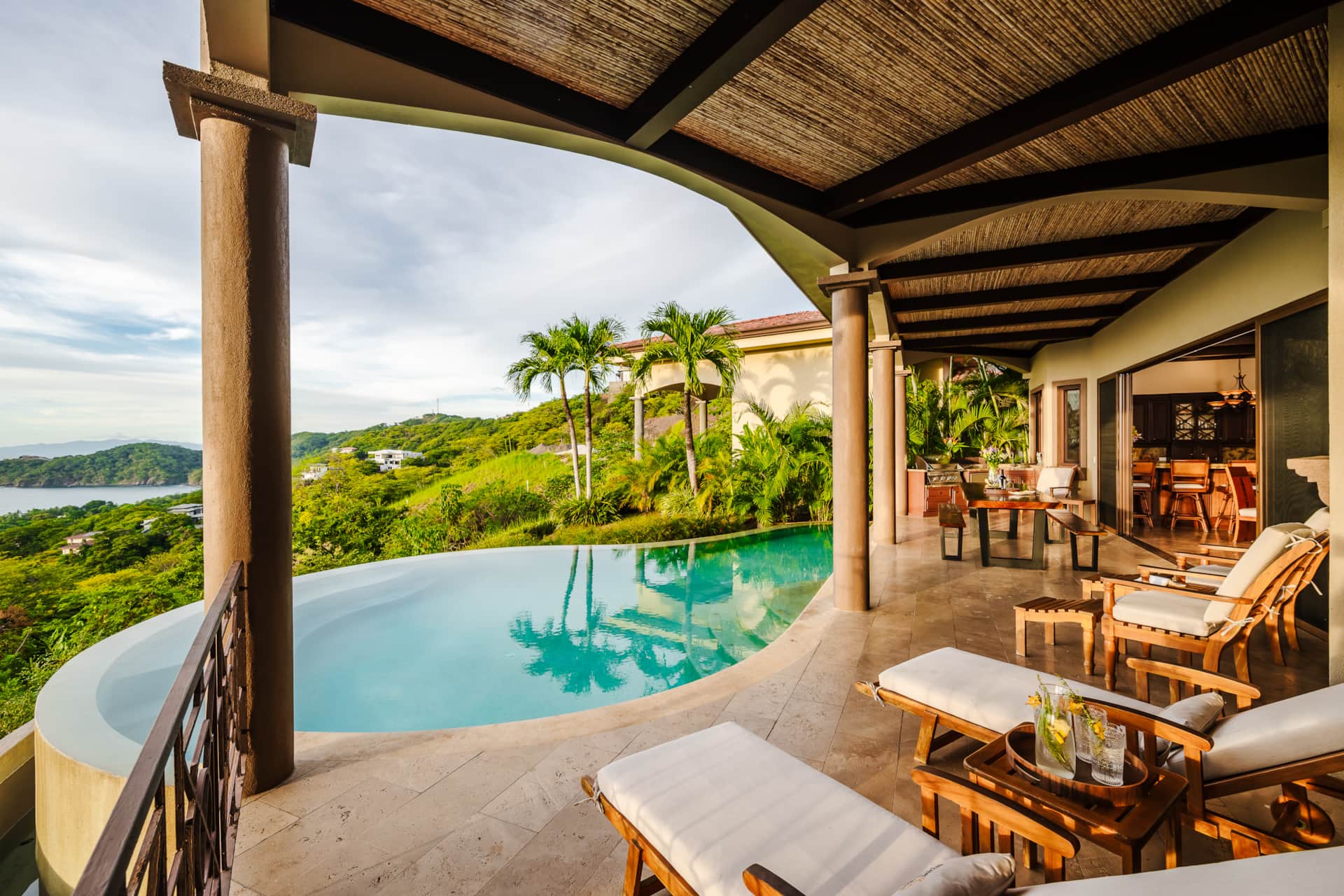
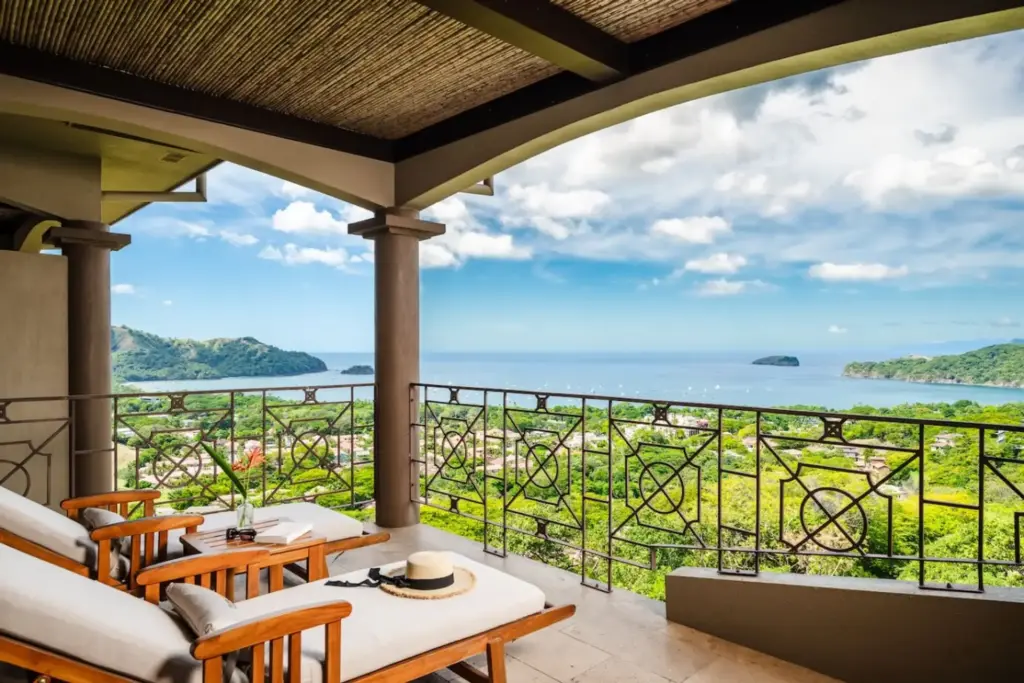
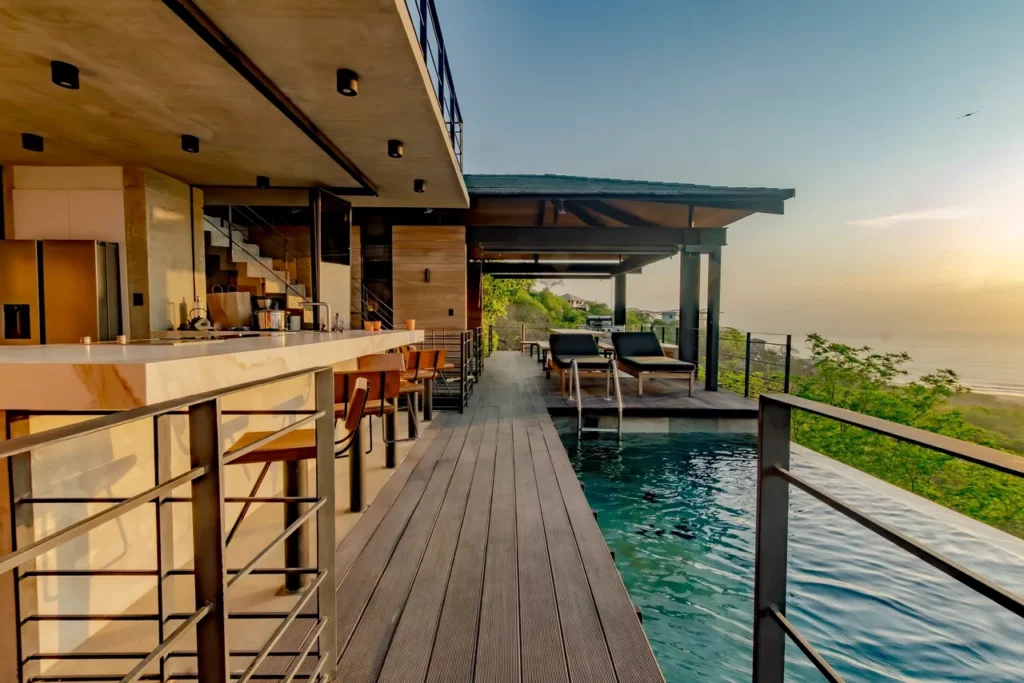
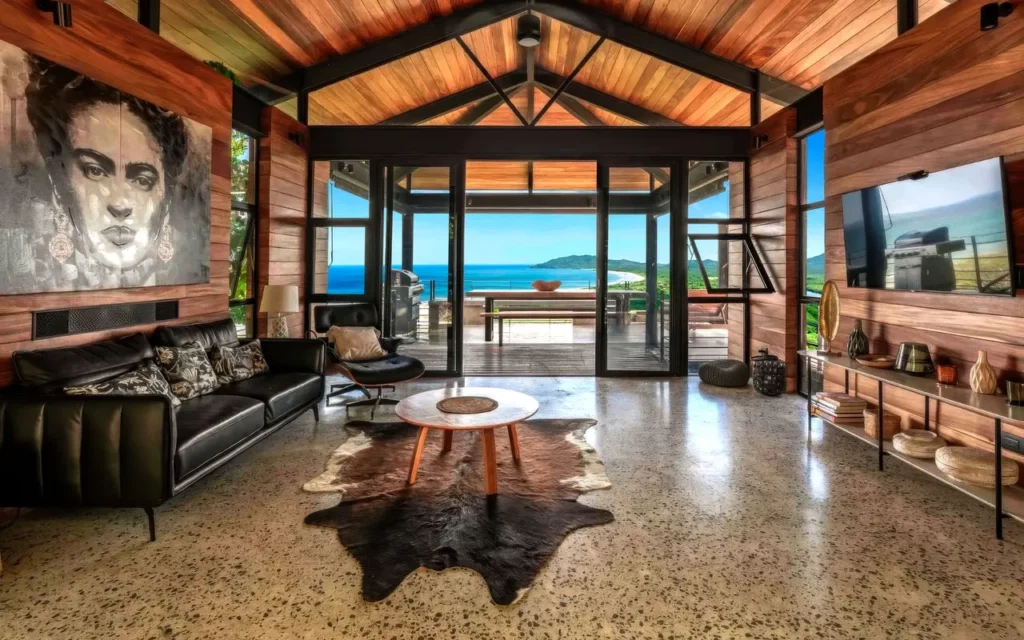
Villagio Musca’s El Coco villa is a four-bedroom ocean-view estate with a private infinity pool, a full kitchen, an outdoor BBQ and wet bar, and Pacífico Beach Club access — built for exactly this kind of trip. Groups here typically split the week between water days out of Coco’s marina and slow days at the villa, and use a private chef for the evenings they don’t feel like driving. If you’d rather be an hour south in the surf town, the Tamarindo property is the other half of the same idea.
Book direct: see the El Coco villa or inquire about dates. Excursions and tours can be arranged through the property before you arrive, which saves you the scramble of booking dive boats and drivers from your phone on day one.
Frequently asked questions
How far is Playa del Coco from Liberia airport? About 35 kilometers, or a 25-to-35-minute drive. It’s one of the closest beach towns to LIR, which makes it a strong choice for short trips.
Do you need a rental car in Playa del Coco? Not to enjoy the town itself — Coco is walkable and taxis are easy. You do want one (ideally 4×4 in green season) if you plan on waterfalls, Rincón de la Vieja, or beach hopping. Private drivers and shuttle services are the alternative.
Is Playa del Coco good for swimming? Yes. The bay is calm and shallow with almost no surf, which makes it one of the more family-friendly swimming beaches in Guanacaste. The sand is dark gray rather than white.
Can you surf at Playa del Coco? Not meaningfully. The bay is too protected. Tamarindo, Playa Grande and Witch’s Rock are the surf destinations, roughly an hour away.
What’s the best month to visit Playa del Coco? For guaranteed sun and best dive visibility, January through April. For value, green landscapes and bull shark diving, June through October. Both work; they’re different trips.
Is Playa del Coco safe? It’s a normal small beach town — standard precautions apply. Don’t leave valuables in a parked car or unattended on the beach, and use licensed taxis or drivers at night.
Is Playa del Coco worth visiting, or should I stay elsewhere? Choose Coco if you want short airport transfers, diving and fishing, and a real town with local restaurants. Choose Tamarindo for surf and nightlife, or Playa Hermosa/Ocotal for a quieter beach.
What’s the water temperature like? Warm year-round, typically in the high 70s to mid 80s Fahrenheit, with cooler upwelling at depth during dry-season months — which is exactly what brings the rays to the Catalinas.
How many days do you need in Playa del Coco? Three full days covers the town, one water excursion and one inland trip. Five to seven lets you add Tamarindo, a second dive day and unhurried beach time.
Can you see wildlife around Playa del Coco? Yes — howler monkeys, iguanas, coatis and abundant birdlife in the surrounding dry forest, plus turtles and rays on nearly every boat trip. For big wildlife days, Rincón de la Vieja and Palo Verde are the trips to book.