Playa del Coco Costa Rica: Things to Do From a Villa Base in Guanacaste

Most guides to Playa del Coco hand you a list of twelve attractions and leave you to figure out the logistics. This one is organized the way you’ll actually experience the town: by how far you have to travel, how much of a day each thing costs you, and what season it works in. Playa del Coco is a 25-to-35-minute drive from Liberia International Airport (LIR) — closer than almost any other beach town in Costa Rica — which changes the math on everything below. You are not spending your first and last days in transit. You are spending them on the water.

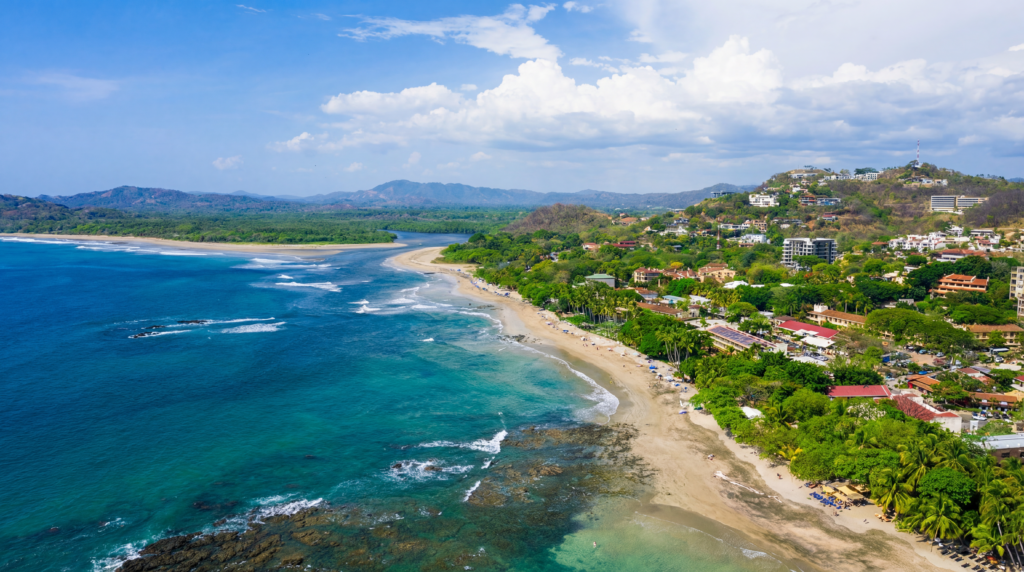
Here’s the honest framing: Coco itself is a working beach town, not a resort strip. Gray-sand crescent bay, fishing pangas moored offshore, a walkable main street with sodas and bars, and a marina culture built around diving and sportfishing. The beach is for sunsets and swimming, not surfing. The real value of Coco is that it’s the best-positioned launch point in northern Guanacaste — nearly everything worth doing in the province is inside a two-hour radius.

Quick reference: what to do and what it costs you in time

ActivityTravel time from CocoTime commitmentBest season
Coco beach + town walk0 min2–3 hrsYear-round
Snorkel / two-tank local dive15–25 min by boatHalf dayYear-round
Catalina Islands diving30–45 min by boatHalf dayDec–Apr (best visibility)
Bat Islands bull shark dive1.5–2 hrs by boatFull day (advanced)Jun–Oct
Sunset catamaran cruise0 min (departs Coco)3–4 hrsYear-round
Sportfishing charter0 minHalf or full dayDec–Apr peak billfish
Playa Ocotal~10 min drive2–4 hrsYear-round
Playa Hermosa / Playa Panamá10–20 min driveHalf dayYear-round
Llanos de Cortés waterfall~1 hr driveHalf dayBest in green season
Rincón de la Vieja National Park1.5–2 hrs driveFull dayDec–Apr (trails drier)
Las Catalinas / Playa Danta~30–40 min driveHalf dayYear-round
Tamarindo~1 hr driveFull dayYear-round

Print that, or screenshot it. It’s the single most useful thing in this post.

In town: what Playa del Coco itself is good for

The beach and the sunset walk

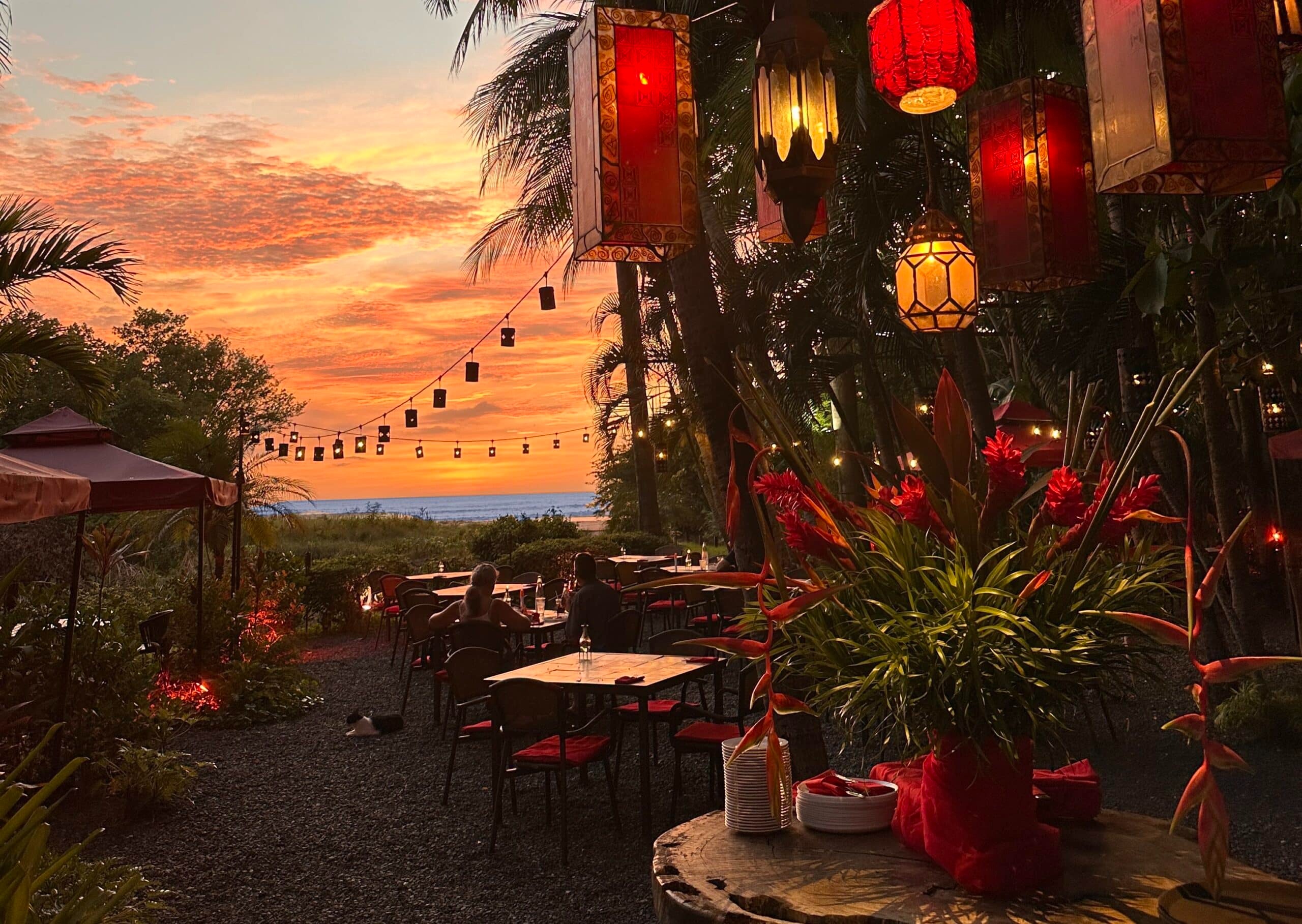
Coco’s bay faces west-northwest, which is why the sunsets here are the town’s most reliable attraction. The sand is dark gray volcanic — it holds heat, so bring sandals in the afternoon — and the water is calm and shallow well out from shore. That combination makes it genuinely good for families with young kids and genuinely bad for surfers. If someone in your group wants waves, that’s a day trip to Tamarindo or Playa Grande, not a walk down the beach.

The best hour is roughly 5:00 to 6:30 p.m. Walk from the town plaza south along the water, watch the fishing boats swing on their moorings, and end up at one of the beachfront restaurants. Sunset in Costa Rica is fast — this close to the equator, you get about twenty minutes of good color, not an hour.

Eating and drinking

Coco punches above its weight for a town this size, largely because of the expat and dive-crew population. You’ll find beachfront seafood, a genuine craft brewing scene, casual sodas serving casado plates for a fraction of tourist-menu prices, and a handful of upscale rooms around the Pacífico development. The Coco Walk and Pacífico areas concentrate most of the shopping and dining; the main road into town has the local sodas.

Two practical notes. First, the sodas are where you eat well and cheaply — a casado with grilled fish, rice, beans, plantain and salad is the standard, and it’s excellent. Second, most kitchens in Guanacaste stop serving earlier than you’d expect. Plan dinner before 9 p.m. unless you’ve confirmed otherwise.

Nightlife, calibrated honestly

Coco has the most active nightlife in the immediate Papagayo area — bars with live music, a casino, sports bars, and a couple of late venues. It is not Tamarindo, and it is definitively not a party-destination town. If nightlife is the point of your trip, you’re in the wrong place by about an hour of driving. If you want two or three good evenings out during a week of beach and adventure days, Coco delivers exactly that.

On the water: why divers choose Coco

This is Coco’s real claim. The town is the primary mainland departure point for northern Guanacaste’s best dive sites, and dive shops here run daily boats.

Local sites (15–25 minutes out) are the reliable everyday option: rocky pinnacles and reefs holding white-tip reef sharks, rays, eels, huge schools of grunts, and frequent turtle encounters. Visibility in Guanacaste is variable — this is a nutrient-rich, plankton-heavy coast, so you trade crystal water for big animal life. Divers coming from Caribbean destinations should recalibrate expectations before they get on the boat.

The Catalina Islands sit off the coast toward Playa Flamingo, a 30-to-45-minute boat ride. From roughly December through April, upwelling brings colder water and giant Pacific manta rays and mobula rays through the site. This is the signature Guanacaste dive and it’s worth planning your trip dates around if rays are on your list.

The Bat Islands (Islas Murciélago), inside the Santa Rosa marine sector, are the bull shark dive. It’s a 1.5-to-2-hour boat ride each way, a full-day commitment with early departure, and it’s for advanced certified divers only — deep, current-swept, and not a place to log your fifth dive. Bull sharks are present roughly June through October, peaking in the mid-summer months, which means the “worst” weather season is actually the right season for this trip. Book it well in advance; operators run limited boats.

Snorkeling works best on the boat tours rather than from the beach — Coco’s bay itself is silty. Half-day snorkel trips visit nearby coves and typically include gear, fruit, and a beach stop.

Sportfishing and catamarans

Coco’s fishing fleet targets sailfish and marlin offshore, with dorado, tuna, roosterfish and snapper closer in. Peak billfish season runs the dry months, December through April, but something is biting year-round. Charters run half days (inshore, family-friendly) or full days (offshore, serious).

Sunset catamaran cruises are the crowd-pleaser and the single best “everyone in the group is happy” activity in Coco: three to four hours, open bar and food, a snorkel stop, and a return under a sunset over open water. If you book one thing on the water, book this.

Beach hopping: the day trips that take under an hour

Playa Ocotal — about ten minutes south, and the quietest of the near beaches. Darker sand, a small protected cove, good shore entry, and a residential feel with a couple of beachfront restaurants. Go here when Coco feels busy.

Playa Hermosa — ten to fifteen minutes north, a long gentle crescent with calm water and a more upscale, quieter atmosphere. Excellent for kayaking, paddleboarding, and swimming with kids.

Playa Panamá — just past Hermosa on the Papagayo Gulf, exceptionally calm and shallow. The most protected water in the area.

Playa Danta and Las Catalinas — about 30 to 40 minutes south, a pedestrian-only planned village built into the hillside with a beautiful crescent beach, a network of mountain-bike trails, and a handful of very good restaurants. It’s the most photogenic half-day trip on this list.

Tamarindo — roughly an hour by road. This is the surf town: surf schools, board rentals, the biggest restaurant and nightlife scene in Guanacaste, and easy access to Playa Grande and Playa Langosta. Make it a full day rather than a dinner run.

Inland: waterfalls, volcanoes, and wildlife

Llanos de Cortés waterfall is the easy win — about an hour from Coco, just off the highway south of Liberia. A wide curtain of water dropping into a swimmable pool with a sandy beach at its base. Small entrance donation, open daytime hours, best flow during and just after green season. Go early; it fills up by mid-morning.

Rincón de la Vieja National Park is the marquee full-day trip, roughly 1.5 to 2 hours away depending on which sector you’re heading to. The Las Pailas loop takes you past bubbling mud pots, steam vents and fumaroles on an active volcano — a genuinely otherworldly hike of about two to three hours. The park is closed Mondays; check current hours and entry fees before you drive, and consider booking timed entry. Around the park’s access road you’ll find hot springs, canyon zip lines, horseback riding and river tubing operators, most of which bundle several activities into one adventure-park day. Do the national park and the adventure park on separate days — trying to combine them makes both rushed.

Palo Verde National Park, about two hours away, is the wetland birding destination: river boat tours through mangroves and marsh with crocodiles, howler monkeys, and enormous concentrations of waterbirds during dry season when the wildlife concentrates around remaining water.

Wildlife closer to home — several rescue and sanctuary operations sit between Coco and Liberia, and howler monkeys, iguanas, coatis and dozens of bird species are routine sightings in the hills right above town. The dry tropical forest of Guanacaste is a genuinely different ecosystem from Costa Rica’s rainforest, and it’s easiest to see wildlife in the dry months when the trees drop their leaves.

The two seasons, and what each one is actually good for

Dry season (roughly December–April). Blue sky nearly every day, brown hillsides, dusty roads, the best visibility for Catalina Islands diving, peak sportfishing, and peak prices and crowds. Book far ahead for Christmas, New Year and Easter week.

Green season (roughly May–November). Afternoon rain rather than all-day rain, green hillsides, full waterfalls, thinner crowds, better rates — and the bull shark window at the Bat Islands. September and October are the wettest months and some operators reduce schedules. If your priority is value and lush scenery, green season is a smart trade; mornings are typically clear, so front-load your activities.

A three-day itinerary that actually works

Day 1 — Land and settle. Arrive LIR, drive 30 minutes, grocery-stock in Coco, swim, then walk the beach for sunset and eat seafood in town. Don’t schedule anything ambitious on arrival day.

Day 2 — Water day. Morning two-tank dive or half-day snorkel trip (departures are early — 7 a.m. is normal). Lunch back in town, an afternoon of pool and shade, then a sunset catamaran or an evening at Playa Ocotal.

Day 3 — Inland day. Leave by 7 a.m. for Rincón de la Vieja, hike Las Pailas, hot springs in the afternoon, and be back in Coco for a late dinner. Alternatively, the softer version: Llanos de Cortés waterfall in the morning, Las Catalinas for lunch and a beach afternoon.

Add a fourth day and it goes to Tamarindo. Add a fifth and it goes to the Bat Islands, if you’re certified.

Where a private villa changes the experience

Everything above assumes one thing: that you’re not tied to a resort’s schedule. Coco’s geography rewards travelers who can leave at 6:30 a.m. for a dive boat, come back and cook lunch, and take the afternoon off by their own pool without negotiating for a lounge chair.

Villagio Musca’s El Coco villa is a four-bedroom ocean-view estate with a private infinity pool, a full kitchen, an outdoor BBQ and wet bar, and Pacífico Beach Club access — built for exactly this kind of trip. Groups here typically split the week between water days out of Coco’s marina and slow days at the villa, and use a private chef for the evenings they don’t feel like driving. If you’d rather be an hour south in the surf town, the Tamarindo property is the other half of the same idea.

Book direct: see the El Coco villa or inquire about dates. Excursions and tours can be arranged through the property before you arrive, which saves you the scramble of booking dive boats and drivers from your phone on day one.

Frequently asked questions

How far is Playa del Coco from Liberia airport? About 35 kilometers, or a 25-to-35-minute drive. It’s one of the closest beach towns to LIR, which makes it a strong choice for short trips.

Do you need a rental car in Playa del Coco? Not to enjoy the town itself — Coco is walkable and taxis are easy. You do want one (ideally 4×4 in green season) if you plan on waterfalls, Rincón de la Vieja, or beach hopping. Private drivers and shuttle services are the alternative.

Is Playa del Coco good for swimming? Yes. The bay is calm and shallow with almost no surf, which makes it one of the more family-friendly swimming beaches in Guanacaste. The sand is dark gray rather than white.

Can you surf at Playa del Coco? Not meaningfully. The bay is too protected. Tamarindo, Playa Grande and Witch’s Rock are the surf destinations, roughly an hour away.

What’s the best month to visit Playa del Coco? For guaranteed sun and best dive visibility, January through April. For value, green landscapes and bull shark diving, June through October. Both work; they’re different trips.

Is Playa del Coco safe? It’s a normal small beach town — standard precautions apply. Don’t leave valuables in a parked car or unattended on the beach, and use licensed taxis or drivers at night.

Is Playa del Coco worth visiting, or should I stay elsewhere? Choose Coco if you want short airport transfers, diving and fishing, and a real town with local restaurants. Choose Tamarindo for surf and nightlife, or Playa Hermosa/Ocotal for a quieter beach.

What’s the water temperature like? Warm year-round, typically in the high 70s to mid 80s Fahrenheit, with cooler upwelling at depth during dry-season months — which is exactly what brings the rays to the Catalinas.

How many days do you need in Playa del Coco? Three full days covers the town, one water excursion and one inland trip. Five to seven lets you add Tamarindo, a second dive day and unhurried beach time.

Can you see wildlife around Playa del Coco? Yes — howler monkeys, iguanas, coatis and abundant birdlife in the surrounding dry forest, plus turtles and rays on nearly every boat trip. For big wildlife days, Rincón de la Vieja and Palo Verde are the trips to book.
Playa del Coco Villa Rental: Inside a Private Ocean-View Estate in Guanacaste

There’s a moment on the drive from Liberia that tells you what kind of trip this is going to be. The highway thins, the dry forest opens up, and somewhere past the turn toward Sardinal the road starts to climb. Thirty minutes after you clear customs, you’re standing on a terrace above the Pacific with a cold drink in your hand, watching the light go orange over the Gulf of Papagayo.

That’s the case for a Playa del Coco villa rental in one sentence. Not the amenity list — the pace. You skip the resort check-in queue, the elevator, the wristband, the pool chair someone claimed at six in the morning with a towel. You unlock a door and the house is yours.

This post is about one specific house: Villagio Musca, El Coco — a four-bedroom, five-bath ocean-view villa perched at the top of the PACIFICO community, sleeping ten. If you’re weighing a villa against the hotels along Coco’s main strip, here’s exactly what renting this one looks like.

Costa Rica luxury villas
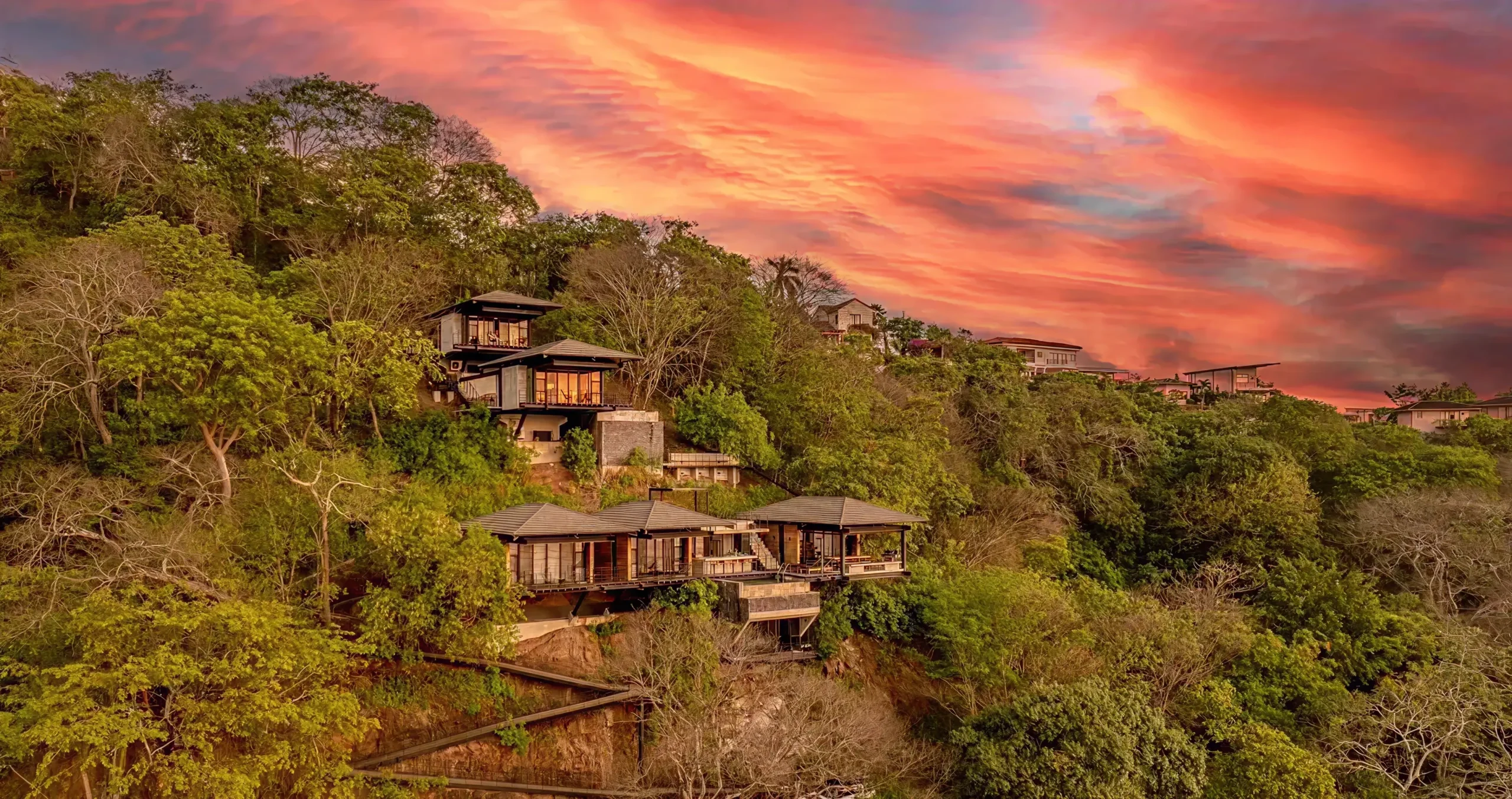
Villagio Musca in Playa del Coco, Costa Rica.

Where Playa del Coco actually is (and why it works)

Playa del Coco — Playas del Coco on some maps, “Coco Beach” to most visitors — sits on the northern Guanacaste coast, tucked inside a horseshoe bay that keeps the water calm enough for kids and boats alike. It is one of Costa Rica’s oldest beach towns, which matters more than it sounds: unlike the resort enclaves built whole in the last decade, Coco is a real town. There’s a fish market, a Sunday-morning soccer game, a grocery run you can actually do.

What makes it work as a villa rental base is geography. Liberia International Airport (LIR) is roughly a 30-minute drive — the shortest airport-to-beach transfer of any major Costa Rican beach destination. No four-hour shuttle over mountain roads, no domestic connection. You land at eleven and you’re swimming by one.

From Coco you’re also inside easy reach of the Papagayo Peninsula, Playa Hermosa, Playa Ocotal, and the dive boats that run to more than twenty sites in the gulf. It is, functionally, the most convenient launch point on the coast.

The villa: what you’re actually renting

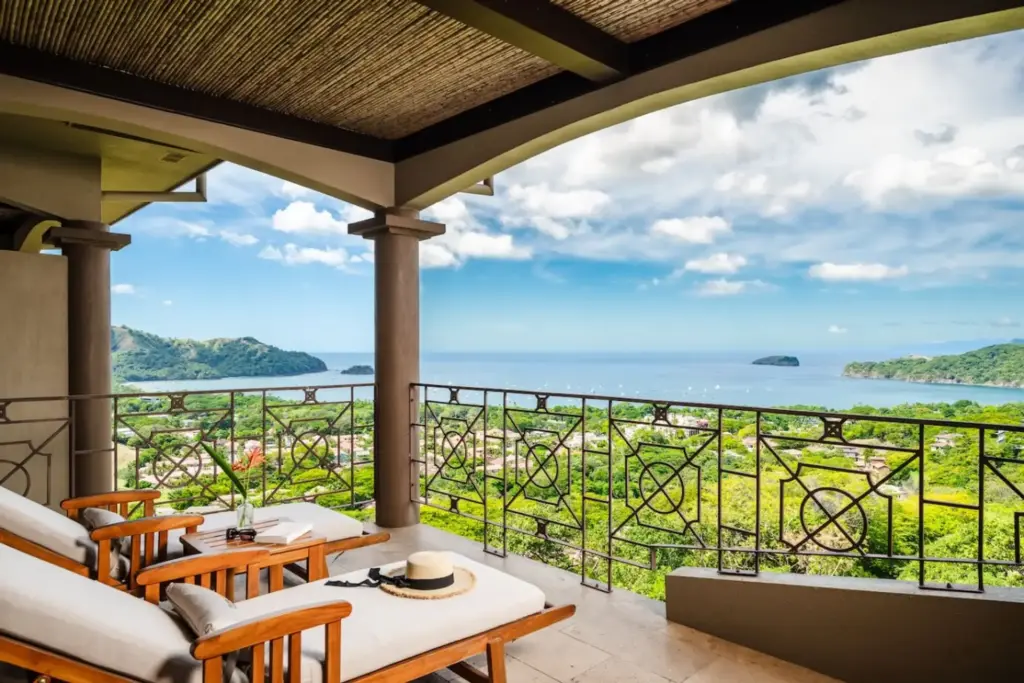
The El Coco villa sits at the top of PACIFICO, a gated residential community above the town. The elevation is the whole point — the house looks over the coastline rather than sitting behind another row of houses.

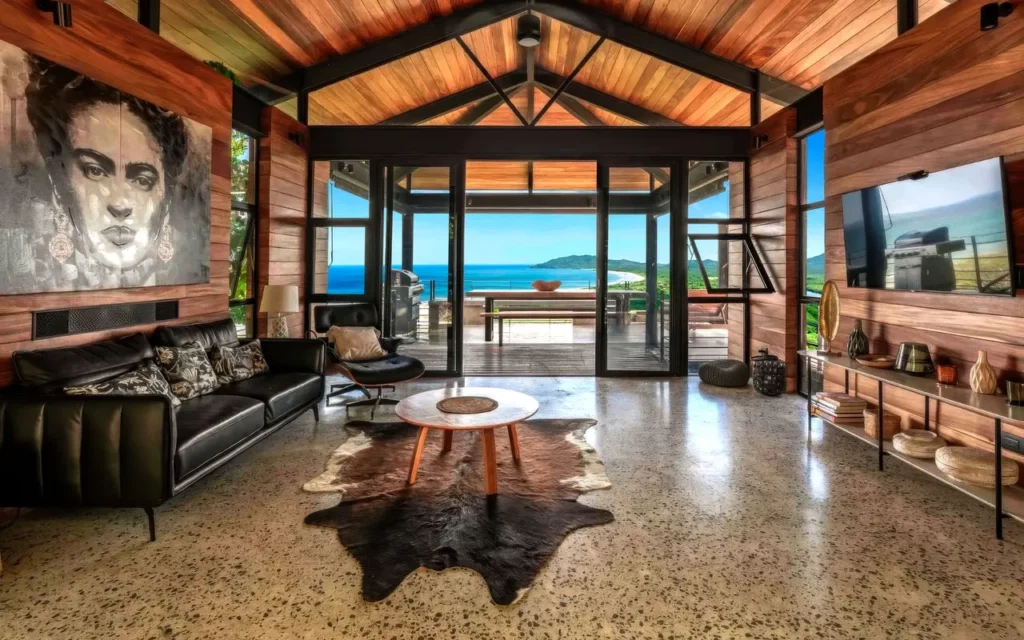
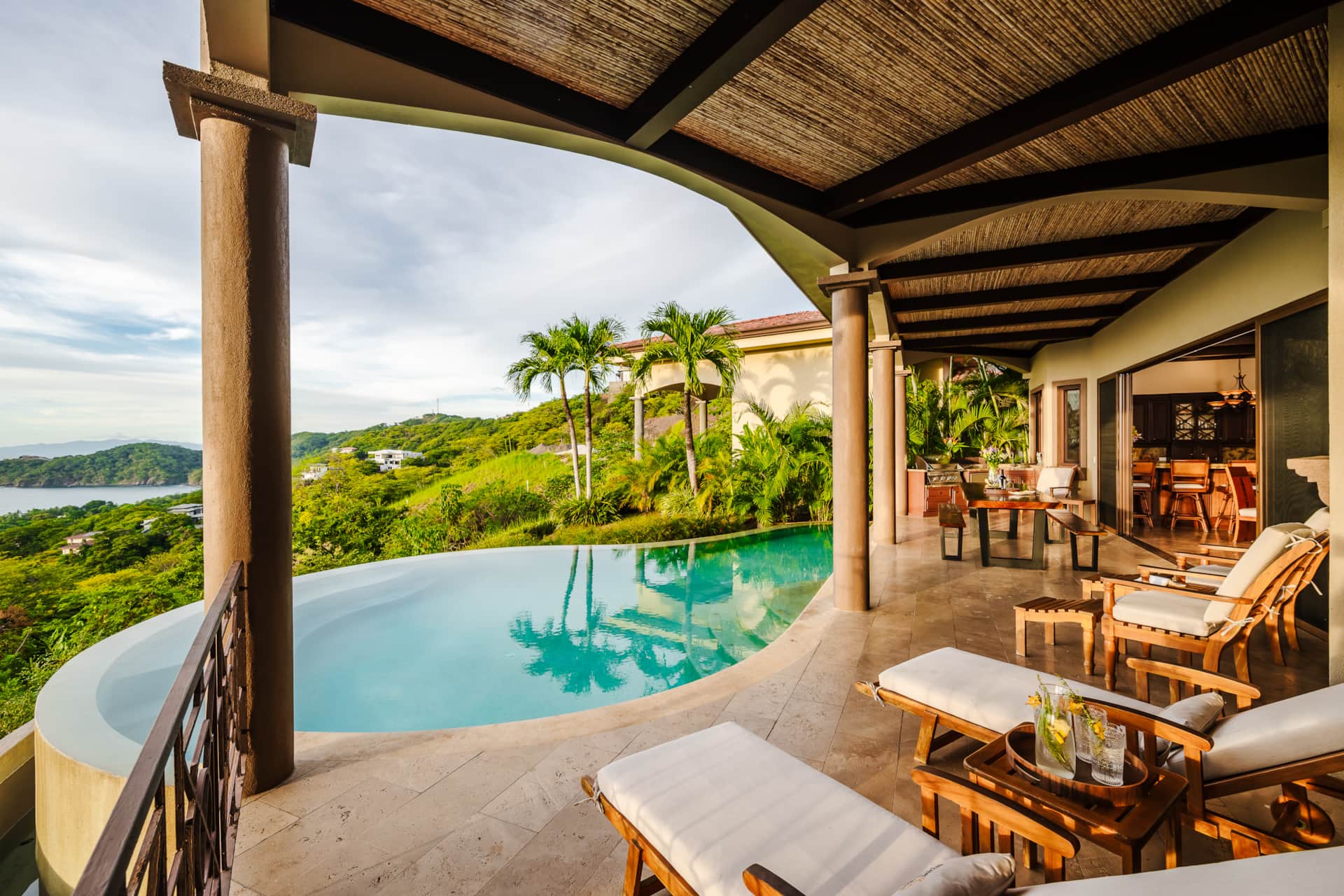
The great room. You walk into a vaulted great room finished in custom hardwood, travertine marble, and granite. It’s warm rather than glossy — the kind of interior that reads as a home someone thought carefully about, not a rental unit outfitted from a catalog. Open-concept living and dining flow straight out onto a covered terrace, so the “inside” and “outside” of an evening are basically the same room.

The kitchen. A proper chef’s kitchen with granite counters, open to the living space. It’s specified well enough that a professional can work in it — which is not incidental, since a private chef is one of the things guests here book most.

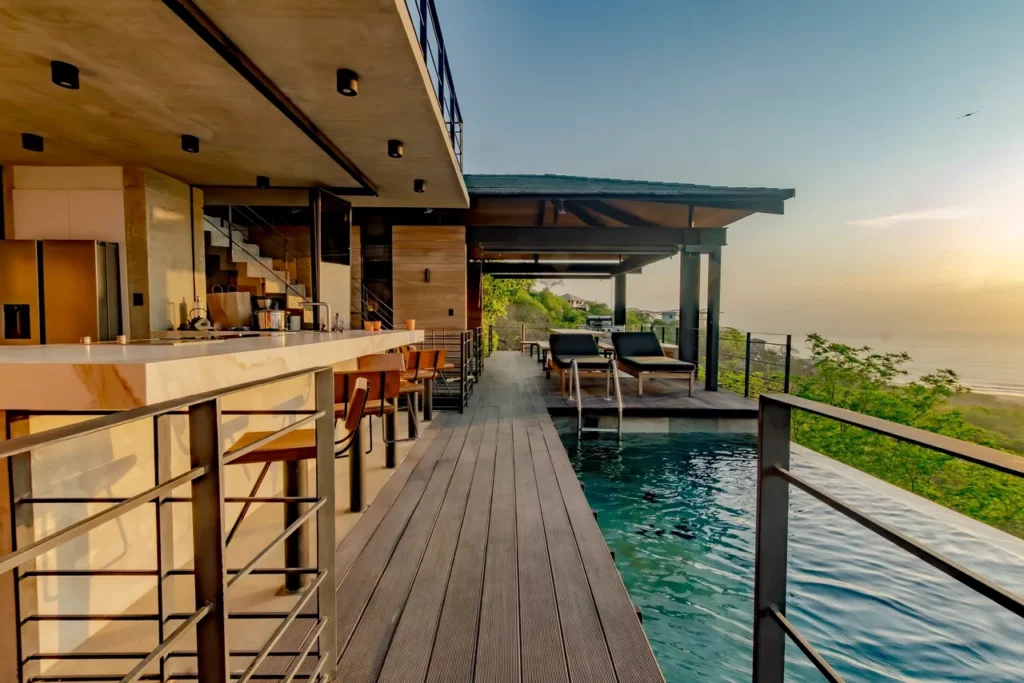
The outdoor level. An infinity pool with coastal views, a built-in BBQ, and a wet bar under the covered terrace. In practice this is where a group spends about seventy percent of its waking hours: coffee at seven, pool at eleven, drinks and grilling as the sun drops.

The bedrooms. Four bedrooms, five beds, five bathrooms, ten guests.

  • First-floor master suite — vaulted ceilings, a spa-inspired bathroom, and its own ocean-view terrace. This is the one couples quietly negotiate over.
  • Second master suite on the main level, alongside a dedicated office, powder room, and storage. The office is a genuine differentiator for anyone extending a trip into a remote work week.
  • Two upstairs bedrooms, each with a private terrace and a luxurious en-suite bath.

Note the ratio: five bathrooms for four bedrooms, and terraces on nearly every sleeping space. Ten people can share this house without ever queuing for anything or feeling like guests in someone else’s room. That balance is what separates a villa that fits a group from one that merely holds one.

What PACIFICO adds

Renting inside PACIFICO comes with community access that a standalone villa can’t offer — this is the part guests consistently underestimate:

  • Private Beach Club on the sand at Playa del Coco — loungers, food and drink service, and somewhere to spend the afternoon without hauling gear.
  • Community pools, tennis and pickleball courts, and a fitness facility.
  • Village shops for the essentials run.
  • 24-hour gated security, which is the reason many families choose a Guanacaste villa over a rental in town.

So you get the privacy of a house and the infrastructure of a resort — the thing most villa rentals force you to choose between.

Villa rental vs. hotel in Playa del Coco

The honest comparison, at a party of eight to ten:

Playa del Coco villa rentalHotel / resort in Coco
Space per personWhole house, private terraces, shared great room4–5 separate rooms, no shared living space
PoolPrivate infinity pool, always availableShared, busiest exactly when you want it
MealsChef’s kitchen, BBQ, optional private chefRestaurant hours and reservations
Group timeEveryone in one room by defaultEveryone texting “where are you?”
Cost logicOne property, split across the groupMultiplied per room, per night
PrivacyGated community, no shared corridorsPublic lobby, shared everything
Best forFamilies, multi-gen trips, friend groups, work retreatsSolo travelers and couples on short stays

The tipping point is usually party size. At two people, a hotel wins on simplicity. At six or more, a villa wins on nearly every axis — and the per-person math often lands in the villa’s favor too.

A day at the villa

6:30 a.m. Howler monkeys handle the alarm clock. Coffee on the terrace while the gulf is still flat and silver.

8:00 a.m. Breakfast at the outdoor table. Somebody swims before eating.

9:30 a.m. Boat day. Dive and snorkel operators run out of Coco to sites across the Gulf of Papagayo; sport fishing charters leave from the same beach. Both are a short drive down the hill.

1:00 p.m. Back at the house. Lunch off the BBQ, then the long flat middle of the afternoon — pool, book, nap, repeat.

4:00 p.m. Beach Club, or a walk into town. Coco’s restaurant scene punches above its weight: fresh ceviche, wood-fired pizza, and a handful of genuinely good seafood spots along the beach road.

6:00 p.m. Sunset from the infinity pool. West-facing coast — this is the payoff view every single evening.

7:30 p.m. Dinner at home. If you’ve booked private chef John Musca, this is a multi-course meal with local fish and produce, served on the covered terrace, with no one washing a dish.

9:30 p.m. Wet bar, cards, the ocean underneath everything. Nobody’s driving anywhere.

Beyond the villa

Guanacaste’s dry-forest ecology sits right behind the beaches, and excursion guide Carlos Lopez arranges the days that guests remember longest:

  • Diving and snorkeling across 20+ sites in the Gulf of Papagayo — rays, turtles, reef fish, occasional bull sharks for the ambitious.
  • Sport fishing — sailfish, marlin, roosterfish, mahi, depending on season.
  • Rincón de la Vieja — volcano hikes, hot springs, mud baths, waterfall rappelling, about two hours out.
  • Catamaran sunset sails along the Papagayo coastline.
  • Palo Verde and estuary tours for crocodiles and wading birds.
  • Surf lessons at Playa Hermosa or a day trip down to Tamarindo.

When to visit Playa del Coco

SeasonMonthsWhat to expect
High / dryDec–AprSun nearly every day, dry landscape, peak prices, best water clarity
ShoulderMay–Jun & NovGreen hills, afternoon showers only, strong value, thinner crowds
GreenJul–OctWarm rain, lushest scenery, lowest rates; Sep–Oct is the wettest stretch

Guanacaste is Costa Rica’s driest province, so even green season here is sunnier than most of the country. A typical September day gives you a bright morning and a dramatic late-afternoon storm you watch from the terrace — which, frankly, is its own attraction. Book December through March six to nine months out; Christmas and Easter weeks go earliest.

Who this villa is right for

  • Multi-generational families — the two master suites solve the “who gets the good room” problem, and grandparents get a main-floor bed.
  • Two or three couples traveling together — four bedrooms, five baths, private terraces, no compromises.
  • Milestone trips — birthdays, anniversaries, small celebrations where a private chef turns dinner into the event.
  • Work-from-paradise stretches — the dedicated office, plus a 30-minute airport run, makes a two-week stay realistic.
  • Divers and anglers — the boats leave from the beach below you.

It’s less suited to a solo traveler or a couple on a two-night stop; the house is built for a group to fill.

How to book

  1. Check dates on the El Coco villa page.
  2. Inquire directly — booking direct means you’re talking to the people who run the house, not a call center.
  3. Add services — private chef, airport transfer from Liberia, excursions with Carlos, grocery pre-stock.
  4. Arrive — land at LIR, drive thirty minutes, unlock the door.

Playa del Coco villa rental FAQs

How far is the villa from Liberia airport? Roughly a 30-minute drive — the shortest airport transfer to any major Costa Rican beach town. Private transfers can be arranged in advance.

How many people does the villa sleep? Ten guests across four bedrooms, five beds, and five bathrooms.

Is there a private pool? Yes — a private infinity pool with coastal views, plus a covered terrace, BBQ, and wet bar. Community pools are also available inside PACIFICO.

Can we have a private chef? Yes. Private chef John Musca can be arranged for individual dinners or your whole stay, cooking in the villa’s chef’s kitchen.

Is Playa del Coco good for families? Very. The bay is calm and swimmable, the town is walkable and safe, and PACIFICO is gated with 24-hour security.

Do we need a rental car? Not strictly — transfers and guided excursions cover most itineraries — but a car adds freedom for beach-hopping to Hermosa, Ocotal, and Flamingo.

Do we get beach club access? Yes, PACIFICO’s private Beach Club sits on the sand at Playa del Coco, along with tennis, pickleball, fitness facilities, and village shops.

What’s the best time to visit? December to April for guaranteed sun; May, June, and November for the best value with green landscapes and mostly-dry days.

Is Playa del Coco good for diving? It’s one of Costa Rica’s best Pacific dive bases, with 20+ sites in the Gulf of Papagayo reachable by short boat ride.

How far in advance should we book? Six to nine months for high season, and as early as possible for Christmas, New Year, and Easter. Green season can often be booked inside 60 days.


Ready to see it? Explore the Villagio Musca El Coco villa — or send us your dates and we’ll tell you what a week on that terrace would look like.

Tamarindo Luxury Rentals: What “Luxury” Actually Buys You in Guanacaste

There is no regulator for the word “luxury” in vacation rentals. Any owner can type it into a listing title. Which is why searching for Tamarindo luxury rentals turns up everything from a genuinely extraordinary hillside estate to a standard three-bedroom with a nice sofa and a good camera angle.

The gap between those two is not marble countertops. It is service, privacy, and setting — three things that are hard to photograph and easy to skip in a listing description. This guide breaks down what actually separates a luxury rental in Tamarindo from a merely nice one, and what to ask before you pay for the difference.

Tamarindo, Briefly

Tamarindo sits on Costa Rica’s Pacific coast in Guanacaste, the country’s driest and sunniest province. Liberia International Airport (LIR) is roughly an hour and fifteen minutes away by car, which makes it one of the most accessible beach destinations in Costa Rica — you can land in the morning and be in a pool by early afternoon.

The town itself is a working beach town rather than a resort strip: surf schools, good restaurants, grocery stores, dive shops, a real local community. That matters for a luxury rental, because it means you can genuinely live at your own pace — provision the kitchen, cook or have someone cook for you, and skip the fixed hotel dinner seating entirely.

Around Tamarindo are five distinct beaches within easy driving distance — Tamarindo, Langosta, Grande, Avellanas and Conchal — plus volcano hot springs, hanging bridges, and catamaran and sport-fishing charters. The area rewards a base you actually want to come home to.

Tamarindo luxury rentals in Costa Rica

The Five Things That Separate Real Luxury Rentals

1. Service, not just square footage

The clearest dividing line in Tamarindo luxury rentals is whether anyone is looking after you. A large house with keys handed over at the door is a house. A property with a private chef option, concierge support, excursion booking, and someone who answers the phone at 9pm is a different product entirely.

Private chef service in particular changes the shape of a trip. Breakfast on the terrace instead of a drive into town. A multi-course dinner with fresh, locally caught seafood while the sun drops into the Pacific, with no reservation, no dress code, and no one driving home afterward. For groups, it is usually the single upgrade with the biggest return.

2. Privacy architecture

The second dividing line is how the property handles a group. Most large rentals are one building with bedrooms off a hallway — technically enough space, practically a shared house where someone is always awake in the room next door.

Properties designed with separated structures solve this. Everyone gets a real retreat to disappear into, and the shared spaces feel chosen rather than forced. If you’re traveling as two or three couples, or as a multigenerational family, this single design decision affects the trip more than any finish or amenity.

3. Setting and elevation

Flat beachfront lots have short views — they end at the first tree line or neighboring roof — and they get public beach traffic past the terrace. Hillside properties above the coast see the whole arc of the coastline and the open Pacific horizon, and they catch the trade winds that beachfront lots miss, which matters a great deal in February and March.

The trade-off is a short drive to the sand rather than a walk. Most travelers who have done both end up choosing elevation the second time.

4. Build quality you can feel

Genuine luxury properties in Guanacaste are usually years in the making, because the climate is unforgiving — salt air, intense sun, heavy green-season rain. What that buys is the difference between a house that photographs well and one that still feels considered on day seven: floor-to-ceiling glass that actually seals, imported fabrics and furniture, hand-selected local stone, and views that were designed into the floor plan rather than discovered afterward.

5. Pools per group, not pools per property

“Private pool” in a listing usually means one pool the whole group shares. On the best multi-structure properties it can mean a pool per villa. If your group has early risers and late sleepers, or people with genuinely different ideas of a good day, this is not a small detail.

Villagio Musca: A Case Study in All Five

Villagio Musca, Tamarindo is a useful example because it happens to hit every one of the criteria above.

It sits high on a rocky hillside above the Pacific, inside a private gated community minutes from downtown Tamarindo — secluded enough to hear birdsong and ocean breeze rather than traffic, close enough that town, the beaches and the estuary are all a short drive.

Critically, it is not a single villa. It is a private collection of three independent ocean-view villas on one estate, each with its own infinity pool and private terrace. Five bedrooms, five and a half bathrooms, three pools, ten guests. Every bedroom, lounge and main gathering space faces the ocean, with views running from the Tamarindo coastline out to the open Pacific.

BedroomsBathroomsPrivate pool
Villa Pacifica (main)33.5Yes
Villa Celeste11Yes
Villa Brisa11Yes
Estate total55.53 pools · 10 guests
private villa tamarindo costa rica with infinity pool
Villagio Musca in Tamarindo, Guanacaste, Costa Rica

Villa Pacifica is the heart of the estate: three bedrooms each with private bathroom and dressing room, an open-concept living and dining area, a gourmet kitchen, and an infinity pool at the terrace edge. Floor-to-ceiling glass opens the interior straight onto the terrace.

Villa Celeste is a completely independent one-bedroom villa — its own entrance, full bathroom, private terrace and infinity pool, nestled in tropical landscaping. Built for couples who want autonomy without leaving the group.

Villa Brisa mirrors Celeste: standalone bedroom, full bathroom, private terrace, private infinity pool, sweeping ocean views.

On service: Villa Pacifica’s kitchen was purpose-designed for private chef experiences, from a traditional Costa Rican breakfast of gallo pinto and fresh tropical fruit to a multi-course dinner built around locally caught seafood and seasonal ingredients.

On build: the estate was more than three years in the making, with French fabrics, Italian furniture and hand-selected local stone, surrounded by a lush tropical garden.

One honest caveat. The hillside setting is what makes the property spectacular, and it also means stairs and elevation changes throughout. Guests who need minimal stairs or easier level access should look at Villagio Musca Playa Del Coco instead.

Tamarindo beach villa rental

Who a Luxury Rental Is Actually Worth It For

Two or three couples traveling together. This is where separated villas pay for themselves. Everyone gets their own front door; nobody negotiates over the good bedroom.

Multigenerational families. Grandparents in the main villa, adult kids in the standalone villas, everyone together at the pool and the dinner table.

Milestone trips. Anniversaries, birthdays, honeymoons, small weddings. The private chef and the sunset terrace do the heavy lifting.

Small corporate retreats and offsites. Ten guests, three pools, a gourmet kitchen and a setting that makes people actually talk to each other.

When it’s probably not worth it: a short two- or three-night stop, a trip where you’ll be out on excursions from dawn to dark, or a group needing step-free access.

Season and Rates

Rates in Tamarindo move with the season, and the season is unusually predictable here.

Dry season, December through April, is peak. Near-guaranteed sunshine, strong breezes, highest demand — December and January book earliest and go fastest.

Green season, May through November, is the value window. Mornings are typically sunny with rain arriving late afternoon, often clearing by evening. The landscape turns brilliantly green, wildlife is more active, and both crowds and rates drop meaningfully. September and October are the wettest months.

May and November are the sweet spot: green landscape, quiet beaches, mostly good weather, shoulder-season pricing.

If you’re booking a specific property for a specific occasion, peak-season dates need to be locked in months ahead. Luxury inventory in Tamarindo is small — there simply aren’t many estates of this kind — and the good weeks go early.

Getting There and Getting Around

Fly into Liberia (LIR) rather than San José if you can. It’s roughly seventy-five minutes from Tamarindo by road versus a four-to-five-hour drive or a connecting flight from the capital, and on a one-week trip that difference is most of a day at each end. Many luxury properties will arrange a private transfer, which is worth it on arrival day when you’re tired and the last thing you want is a rental counter.

Once you’re settled, you’ll still want a car. Tamarindo town is walkable, but the beaches and excursions that make the area worth visiting — Playa Grande across the estuary, Avellanas to the south, Conchal to the north, the Rincón de la Vieja volcano area inland — all need wheels. In green season, take the 4×4. Some of the most rewarding roads here are unpaved, and after an afternoon downpour that stops being optional.

Questions Worth Asking Before You Book

  • What service is actually included, and what’s an add-on? Chef, concierge, excursion booking, airport transfers, daily housekeeping — get the list.
  • Is the pool private to my unit or shared across the property?
  • Air conditioning in every bedroom? Guanacaste is genuinely hot February through April.
  • How many minutes to the beach and to town? Ask for minutes, not adjectives.
  • Stairs and elevation changes? Ask directly if anyone in your group has mobility limits.
  • Is a rental car needed? In Tamarindo, for anything beyond the town beach, yes — and take a 4×4 in green season.
  • Who do I call at 9pm? The answer tells you most of what you need to know.

Book Direct Where You Can

Booking directly with the property rather than through a listing platform generally gets you faster and more detailed answers, more flexibility on arrival and departure, and direct contact with the people who actually run the estate — which matters most when you’re arranging chef service, transfers or excursions around a specific occasion.

Frequently Asked Questions

What counts as a luxury rental in Tamarindo? Beyond size and finishes: available service (private chef, concierge, excursion support), genuine privacy for each part of the group, an elevated or secluded setting, and build quality that holds up to the coastal climate.

How far is Tamarindo from Liberia airport? Roughly an hour and fifteen minutes by car. Liberia (LIR) is the closest international airport and the easiest route in.

How many guests does Villagio Musca sleep? Up to ten, across five bedrooms and five and a half bathrooms in three separate villas.

Do all three villas have their own pool? Yes — three private infinity pools, one per villa.

Can I book just one villa rather than the whole estate? Contact the property directly; availability and configuration are handled case by case.

Is a private chef available? Yes. Villa Pacifica’s gourmet kitchen was designed for private chef service, which can be arranged for your stay.

When is the cheapest time to rent a luxury villa in Tamarindo? Green season, May through November, with September and October the lowest-demand months. May and November offer the best balance of price and weather.

Is a rental car necessary? For anything beyond downtown Tamarindo, yes. A 4×4 is recommended in green season.

Is Villagio Musca suitable for guests with mobility limitations? The Tamarindo estate is hillside, with stairs and elevation changes throughout. Guests needing easier access should consider the Playa Del Coco property.

How far in advance should I book? For dry-season dates, several months. Luxury inventory in Tamarindo is limited and peak weeks book early.

Ready to see it? Explore Villagio Musca, Tamarindo — three ocean-view villas, three private infinity pools, one hillside above the Pacific.

Tamarindo Beach Villas: How to Choose the Right Ocean-View Stay in Guanacaste

Tamarindo is the rare Costa Rican beach town that manages to be two things at once. It is lively — surf schools, sunset bars, a genuinely good restaurant scene — and it is wild, edged by mangrove estuary, dry tropical forest, and a string of beaches that get emptier the further you walk. That combination is why so many travelers searching for Tamarindo beach villas end up here rather than in a resort somewhere quieter.

But “beach villa” is one of the least precise phrases in travel. It can mean a house with sand at the door and no privacy at all. It can mean a hillside estate ten minutes from the water with a view no beachfront property could ever match. It can also mean, uncomfortably often, a listing photographed from the one angle where the ocean is visible.

This guide is about telling the difference. Below is what actually matters when choosing among Tamarindo villas — the beach you base yourself on, what elevation does to a view, how privacy works in a group, and the practical questions worth asking before you book.

Why Tamarindo Is the Right Base on Costa Rica’s Pacific Coast

Guanacaste is Costa Rica’s driest, sunniest province, and Tamarindo sits near the middle of its most accessible stretch of coast. Liberia International Airport (LIR) is roughly an hour and fifteen minutes away by car — short enough that you can land mid-morning and be swimming by lunch, which is not true of most Costa Rican beach destinations reached through San José.

What sets Tamarindo apart from the quieter beach towns nearby is optionality. You can have a day of doing nothing at all, and you can have a day that involves a sunrise surf lesson, a zip-line canopy tour, a volcano hot spring, and a table at a very good restaurant — without changing your base. For a group where one person wants adventure and another wants a book and a pool, that flexibility is the whole game.

The town is also a working hub, not a resort compound. There are grocery stores, pharmacies, ATMs, dive shops, and a genuine local community. Stay in a villa here and you can actually provision it, cook, and live at your own pace rather than eating every meal at a fixed hotel restaurant.

The Beaches: Choosing Where to Base Yourself

Most people search for Tamarindo beach villas without realizing the town is the gateway to at least five distinct beaches, each with a completely different character. Which one you’re near shapes your whole trip.

BeachCharacterBest forDistance from town
Playa TamarindoWide, social, surf schools, sunset crowdBeginners, nightlife, restaurantsIn town
Playa LangostaQuieter, rockier, dramatic sunsetsCouples, privacy, tide pools~5–10 min
Playa GrandeLong, wild, protected turtle nestingExperienced surfers, solitude~20 min via estuary
Playa AvellanasRural, palm-lined, famous beach barSurfers, day trips, horseback riding~25–30 min
Playa ConchalCrushed-shell sand, calm turquoise waterSwimming, snorkeling, families~40 min

Playa Tamarindo is the main event: a long, gently sloping beach with consistent beginner-friendly waves and a sunset ritual that draws the whole town. It’s the most convenient and the most social.

Playa Langosta, just south, is a different world — rockier, quieter, with tide pools and some of the best sunsets on this coast. Villas near Langosta tend to be more secluded.

Playa Grande, across the estuary, is a protected leatherback turtle nesting site and a serious surf beach. It stays wild because development is restricted.

Playa Avellanas and Playa Conchal are day trips worth making — Avellanas for the rural, palm-lined surf-town feel, Conchal for water calm and clear enough for genuine snorkeling.

The practical takeaway: you don’t need to be on one specific beach. You need to be close enough to reach several. A villa within minutes of downtown Tamarindo puts all five within a comfortable drive, and that beats being locked onto a single stretch of sand.

Beachfront vs. Ocean View: The Distinction Nobody Explains

This is the single most consequential choice among Tamarindo villa rentals, and it is rarely explained honestly.

Beachfront means sand access. It also usually means street noise, public beach traffic past your terrace, less privacy, salt corrosion on everything, and — because beachfront land is flat — a view that ends at the first tree or neighboring roofline.

Elevated ocean view means a short drive to the sand, and in exchange, a panorama. From a hillside above the coast you see the whole arc of the shoreline, the surf lines forming offshore, the boats, and a sunset that drops into open Pacific rather than behind a building. Hillside properties also catch the trade winds that flat beachfront lots miss, which matters in February and March.

If your priority is walking barefoot from bed to water, choose beachfront. If your priority is waking up to a view you’ll remember for a decade, and you’re comfortable with a five-to-ten-minute drive, choose elevation. Most travelers who have done both choose elevation the second time.

What Sets Villagio Musca Apart

Villagio Musca sits high on a rocky hillside above the Pacific, inside a private gated community minutes from downtown Tamarindo — and it answers the beach-villa question in an unusual way.

It isn’t a single villa. It’s a private collection of three independent ocean-view villas on one hillside estate, each with its own infinity pool and private terrace. Five bedrooms, five and a half bathrooms, three pools, room for ten guests. Every bedroom, lounge, and gathering space faces the ocean, with views running from the Tamarindo coastline to the open Pacific horizon.

Villa Pacifica is the main villa: three bedrooms, each with its own bathroom and dressing room, an open-concept living and dining area, a gourmet kitchen, and an infinity pool at the terrace edge. Floor-to-ceiling glass opens the interior onto the terrace.

Villa Celeste is a standalone one-bedroom villa with its own entrance, full bathroom, private terrace, and infinity pool — built for couples who want autonomy without leaving the group.

Villa Brisa mirrors Celeste: one bedroom, one bathroom, private terrace, private infinity pool, sweeping ocean views.

Tamarindo beach villas for rent
Villagio Musca in Tamarindo, Costa Rica.

That structure solves a problem most Tamarindo luxury villas can’t. Two couples traveling together each get their own villa. A family with older kids can give them real independence. A group of friends can spread out without anyone feeling like a guest in someone else’s space — and everyone still shares one spectacular view, one estate, one trip.

The property was more than three years in the making, with French fabrics, Italian furniture, and hand-selected local stone. A lush tropical garden surrounds it, so what you hear from the terrace is birdsong and ocean breeze rather than traffic.

One honest caveat: the hillside setting means stairs and elevation changes throughout the property. Guests who need minimal stairs or level access should look at Villagio Musca Playa Del Coco instead.

The Private Chef Experience

Villa Pacifica’s kitchen was designed for private chef service, and it’s one of the features guests talk about most. Think a Costa Rican breakfast of gallo pinto and fresh tropical fruit on the terrace, or a multi-course dinner built around locally caught seafood and seasonal ingredients, served as the sun goes down over the Pacific.

It’s a meaningfully different experience from a hotel restaurant: no reservations, no dressing for dinner, no leaving the view. For milestone trips — anniversaries, birthdays, family reunions — it’s usually the evening people remember.

Who Villagio Musca Suits Best

Two or three couples traveling together. The three-villa layout is close to purpose-built for this: shared days, separate nights, no one drawing the short straw on bedrooms.

Multigenerational families. Grandparents in the main villa, adult children in the standalone villas, everyone together at the pool and dinner table.

Milestone celebrations. Anniversaries, birthdays, small weddings, honeymoons — the private chef and the sunset terrace do most of the work.

Small corporate retreats. Ten guests, three pools, gourmet kitchen, and a setting that makes people actually talk to each other.

Less suited to: guests needing step-free access, and anyone whose non-negotiable is stepping straight from the terrace onto sand.

Villagio Musca

When to Visit

Dry season (December–April) is peak: near-guaranteed sunshine, big breezes, the busiest and priciest months. December and January book earliest.

Green season (May–November) is the underrated one. Mornings are typically sunny, with rain arriving in the late afternoon and often clearing by evening. The landscape turns brilliantly green, wildlife is more active, and both crowds and rates drop. September and October are the wettest.

Shoulder months (May and November) are the sweet spot — green landscape, quieter beaches, mostly good weather.

Practical Booking Notes

Ask these before booking any Tamarindo beach villa:

  • How far is the beach, in driving minutes? Not “close to the beach” — minutes.
  • Is there air conditioning in every bedroom? Guanacaste is hot from February through April.
  • Is the pool shared or private to my unit? On multi-villa properties this is the difference between a good trip and a great one.
  • Is a car necessary? In Tamarindo, for anything beyond the town beach, yes — and rent a 4×4 in green season.
  • Stairs and elevation? Ask directly if anyone in your group has mobility limits.
  • What’s included? Chef service, concierge, excursion booking, and airport transfers are often add-ons.

Book directly with the property when you can. You’ll usually get faster answers, more flexibility, and direct access to the people who actually run the estate — which matters when you’re arranging chef service or excursions.

Frequently Asked Questions

Are Tamarindo villas beachfront? Some are; many of the best ocean-view villas are on the hillsides above the coast. Elevated villas trade direct sand access for panoramic views, better breezes, and much more privacy.

How far is Tamarindo from Liberia airport? Roughly an hour and fifteen minutes by car. Liberia (LIR) is the closest international airport and by far the easiest route in.

How many people does Villagio Musca sleep? Up to ten guests across five bedrooms and five and a half bathrooms, spread over three separate villas.

Does each villa really have its own pool? Yes — three private infinity pools, one for each of the three villas.

Can I rent just one of the villas? Contact the property directly; availability and configuration are handled case by case.

Is a rental car necessary? For exploring beyond downtown Tamarindo, yes. A 4×4 is recommended in green season.

What’s the best time of year to visit Tamarindo? December through April for reliable sun; May and November for the best balance of good weather, green landscape, and fewer crowds.

Is Tamarindo good for beginner surfers? It’s one of the best beginner surf beaches in Costa Rica, with gentle, consistent waves and many surf schools.

Is there a private chef available? Yes — Villa Pacifica’s gourmet kitchen was designed for it, and chef service can be arranged for the stay.

Is the property accessible for guests with mobility limitations? The Tamarindo estate is built on a hillside with stairs and elevation changes throughout. Guests needing easier access should consider the Playa Del Coco property.

Ready to see it? Explore Villagio Musca, Tamarindo — three ocean-view villas, three private infinity pools, one hillside above the Pacific.